

By Dr. John F. Murray
To build a truly cohesive team, you need to go far beyond just team-building games. It’s about cultivating an environment of psychological safety, setting crystal-clear goals, and genuinely encouraging the bonds between people to grow.
This isn’t about forced fun; it’s about creating a deep, shared commitment where every single person feels plugged into the mission and to their colleagues. A practical first step is to start your next team meeting by asking: “What’s one thing we can do this week to make it easier for everyone to contribute?” This simple question opens the door to actionable change.
Understanding the DNA of a Cohesive Team
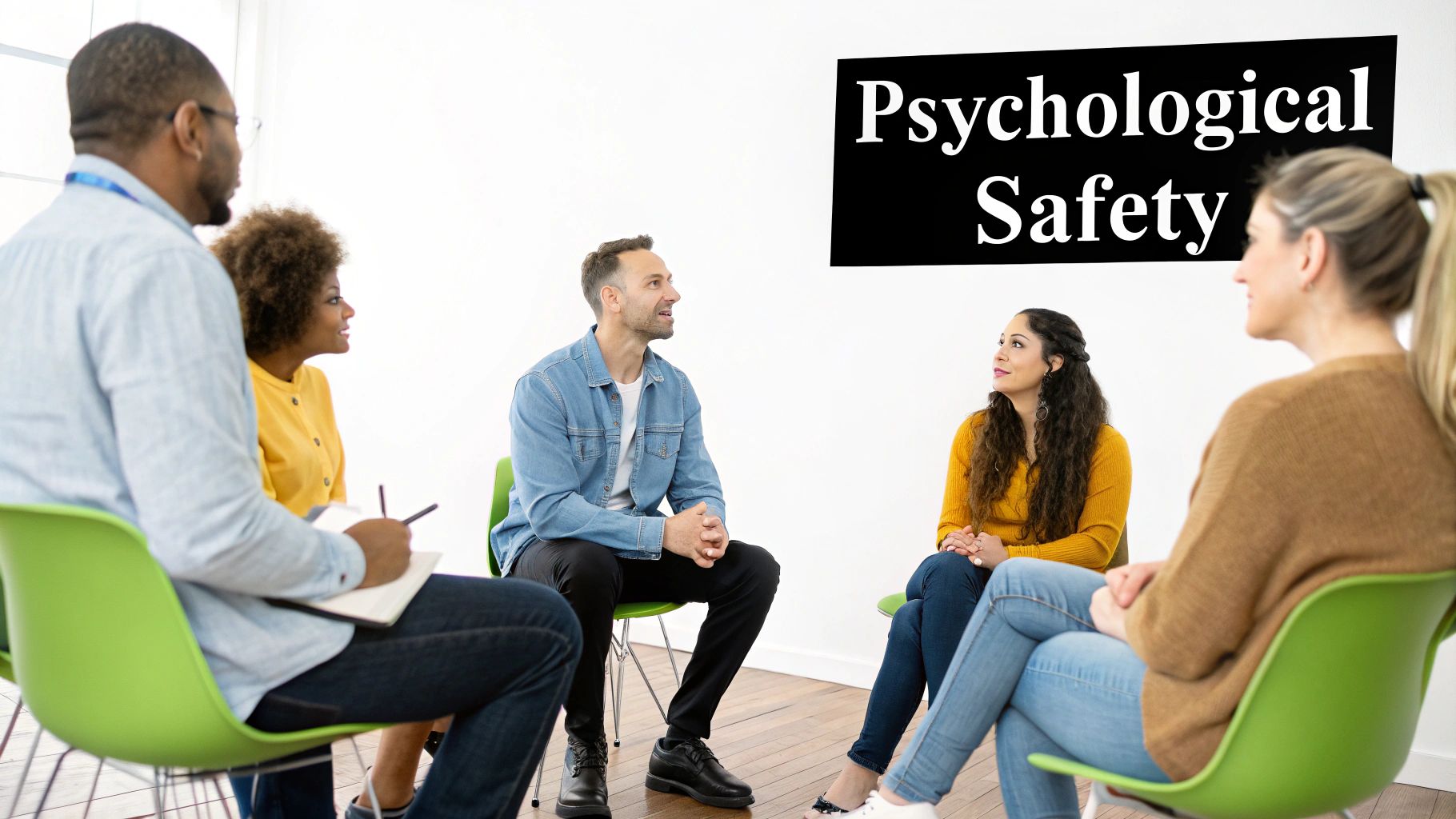
Before you can start building a stronger team, you have to know what real cohesion looks and feels like. A lot of people mistake cohesion for a group where everyone is friends and conflict never happens. That’s a myth.
A truly cohesive team isn’t just one that gets along; it’s one that’s so aligned and committed that they can tackle tough challenges head-on, together.
This powerful dynamic is built on two distinct but totally interconnected pillars. Getting a handle on them is the first real step to building a team that clicks.
To quickly grasp these core ideas, here’s a simple breakdown of the framework we’ll be using.
The Pillars of Team Cohesion at a Glance
| Pillar | Core Concept | Direct Impact |
|---|---|---|
| Social Cohesion | The interpersonal glue—trust, respect, and personal bonds among team members. | Boosts morale, improves communication, and builds a strong support system. |
| Task Cohesion | The shared commitment to the team’s goals and objectives. | Drives focus, alignment, and a collective push toward a common outcome. |
| Psychological Safety | The belief that one can speak up, make mistakes, and be vulnerable without punishment. | Unlocks innovation, fosters healthy debate, and accelerates learning and growth. |
This table provides a high-level view, but the real magic is in understanding how these elements interact and support one another in the daily grind.
Introduce Rituals That Foster Psychological Safety
Consistency is the bedrock of trust. I’ve found that small, repeatable rituals are far more powerful than a single, expensive offsite. They create predictable moments for connection and vulnerability—the very cornerstones of psychological safety.
One of the most effective rituals I use is the ‘Weekly Wins & Challenges’ round. Kick off every Monday meeting by having each person share one professional win from the previous week and one challenge they’re currently wrestling with. The point isn’t to solve the problem right then and there. It’s to normalize the act of admitting you don’t have all the answers.
A leader’s vulnerability is a powerful permission slip for the rest of the team. When you share your own challenges openly, you signal that it’s safe for everyone else to do the same. This simple act can dramatically shift a team’s dynamic from guarded to open. Practical Example: A manager might say, “My win was getting the budget approved. My challenge is that I’m struggling to prioritize the next steps and would love some input later.”
For practical and engaging activities, consider things like organizing team-building events like Buddy Summer Day to forge stronger bonds quickly. The key is to find activities that allow people to connect on a human level, reinforcing that you’re a team of people, not just a collection of job titles.
To help you choose the right approach, here’s a quick breakdown of a few impactful interventions.
Clarify Roles to Eliminate Confusion
Ambiguity is a cohesion killer. When people are fuzzy on their responsibilities or who makes the final call, they either step on each other’s toes or let crucial tasks fall through the cracks. The ‘Role Clarity Matrix’ is a fast and incredibly effective way to cut through this confusion.
Get the team together and draw up a simple chart. List key tasks or decisions down the left column, and put every team member’s name across the top. Then, work together to fill the matrix using these codes for each task:
- A – Accountable: The one person who ultimately owns the outcome.
- R – Responsible: The person or people who actually do the work.
- C – Consulted: People whose input is needed before a decision is made.
- I – Informed: People who are kept in the loop after a decision is made.
Actionable Tip: Don’t just fill it out and file it away. Post the completed matrix in a shared space like Confluence or a project channel. Refer back to it whenever a new task begins to reinforce the agreed-upon roles. This exercise forces critical conversations about expectations and ownership and provides a go-to reference.
Building Collective Confidence
An individual’s confidence is great, but collective confidence is the secret sauce. It’s that shared, unshakable belief that “we, as a team, can do this,” and it’s what fuels major breakthroughs. When a team has a deep-seated belief in its own capabilities, people are far more willing to take smart risks, support one another, and push through setbacks.
You can actively build this shared belief with a few simple, repeatable exercises.
- Strength Spotting: Dedicate just five minutes in a team meeting for this. Each person takes a turn acknowledging a specific strength they saw in another teammate that week. Something like, “Sarah, I was so impressed by how you calmly handled that difficult client call. Your patience is a real asset to our team.” This immediately shifts the group’s focus from individual weaknesses to collective assets.
- Create a ‘Win Archive’: Start a shared document or a dedicated Slack channel where anyone can post team wins, no matter how big or small. This could be a piece of glowing client feedback, a bug that was finally squashed, or a tough deadline that was met. This archive becomes a tangible record of competence that the team can look back on during tough times to remember what they’re capable of.
These aren’t just feel-good practices. They systematically build a reservoir of shared belief that the team can draw on when its confidence is tested.
A team’s confidence is like a muscle; it grows stronger with intentional, consistent training. Small, regular affirmations of collective competence build a powerful defense against the self-doubt that can fracture a team under pressure.
What’s the Difference Between Healthy Debate and a Destructive Argument?
The line between productive conflict and a destructive fight comes down to a single word: respect. A healthy debate is about attacking the problem. Adestructive argument is about attacking the person.
You know you’re in a healthy debate when you see:
- People genuinely listening and trying to understand different points of view.
- A shared focus on finding the best possible outcome for the team, not just winning the point.
- The ability to challenge an idea while still valuing the person who brought it up.
Actionable Tip: As a leader, it’s your job to model what respectful disagreement looks like and to step in immediately to reframe the conversation if it veers off course. You can say something like, “Let’s pause for a second. We’re talking about two different issues. Can we first focus on the core problem, which is X?” This redirects the energy from personal conflict back to collaborative problem-solving.
For more information on mental performance coaching or psychological services, or to schedule a consultation, visit my Sports Psychology Services page.