
By Dr. John F. Murray
Sports psychology for young athletes isn’t about “fixing” a problem. It’s about building mental skills like focus, confidence, and resilience that are every bit as important as physical training.
Think of it as developing a ‘mental muscle’—one that helps your child perform under pressure, bounce back from tough losses, and ultimately, find more joy and fulfillment in their sport.
What Is Sports Psychology for Young Athletes
When most of us hear the word “psychology,” our minds often jump to therapy or mental health issues. While that’s certainly one application, sports psychology for young athletes is much more like strength and conditioning for the mind. It’s about giving them practical, powerful tools to manage their thoughts, emotions, and behaviors so they can be at their best when it counts.
Instead of waiting for something like performance anxiety to become a serious roadblock, this kind of mental skills training gives kids a proactive toolkit. A coach teaches a young soccer player how to dribble or a swimmer how to perfect their stroke; a sports psychologist helps them train their brain for competition. This training is crucial because, as any athlete can tell you, the mental game is what often separates the good players from the truly great ones.
Key Takeaway: Mental skills training is a proactive approach to performance. It equips young athletes with the mental tools they need to handle the pressures of competition and the challenges of personal growth, both on and off the field.
How Team Dynamics Shape a Child’s Mental Game
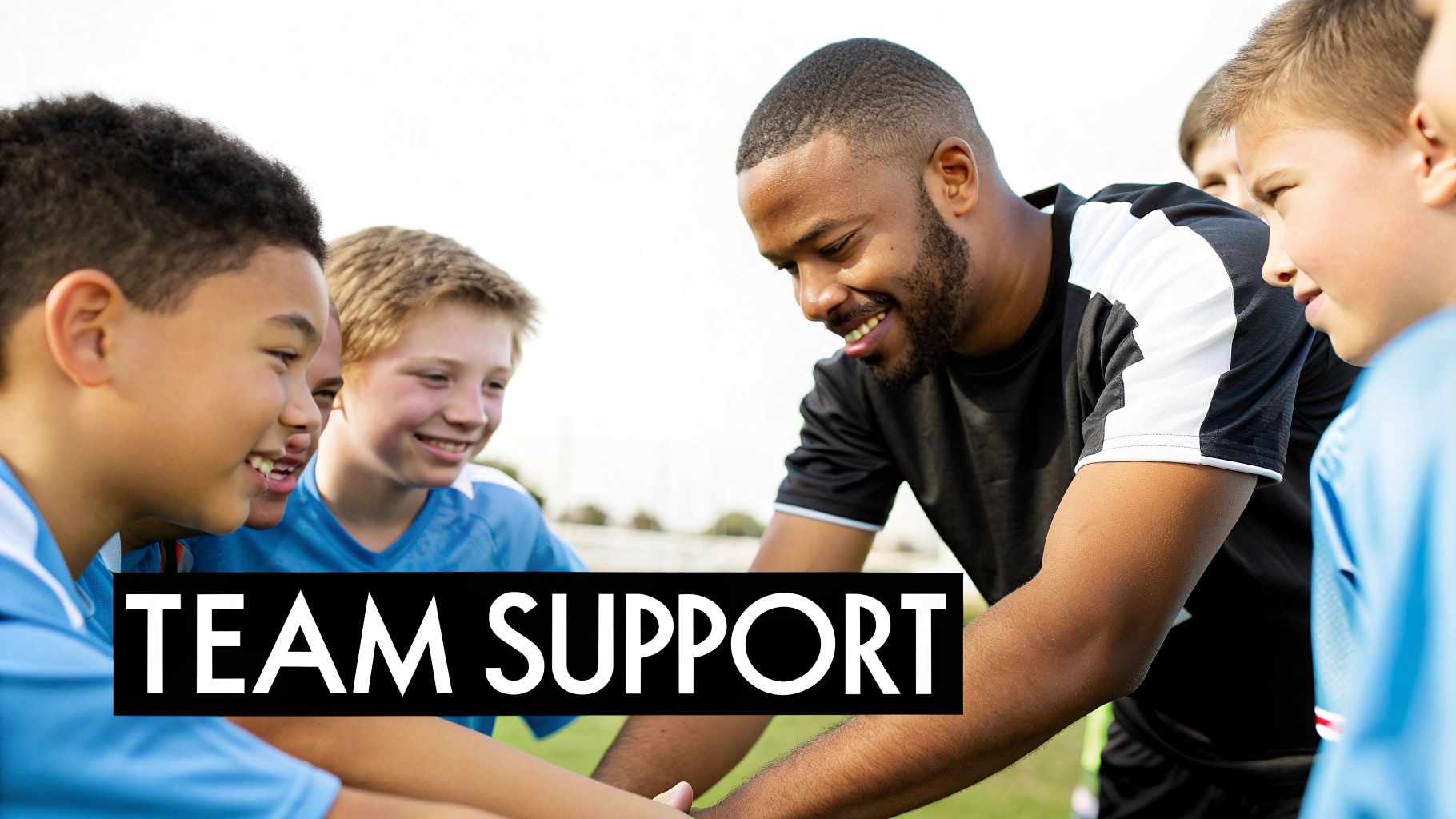
While we often focus on individual skills, no young athlete ever truly develops in a vacuum. The team environment is a powerful force, one that can either supercharge a child’s mental game or hold it back. A positive culture isn’t just “nice to have”—it builds a sense of belonging, sharpens social skills, and provides a much-needed buffer against the pressures of competition.
A healthy team is far more than just a group of kids wearing the same jersey; it becomes a genuine support system. When athletes feel that connection to their teammates, they’re more willing to take risks, communicate honestly, and even find joy during a tough practice or a losing streak. This social bond is a cornerstone of sports psychology for young athletes because it directly feeds their confidence and resilience.
The Science of Social Support in Sports
This isn’t just feel-good fluff. The benefits of a strong team environment are backed by solid research. It turns out the social dynamics of a team offer a unique kind of mental protection as kids navigate the highs and lows of their sport.
A huge U.S. study of over 11,000 children found that kids aged 9-13 who played team sports showed lower rates of anxiety, depression, and attention problems than their peers. What’s really interesting is that kids who only played individual sports sometimes had worse mental-health profiles than kids who didn’t play sports at all. This really shines a light on the protective effect of having teammates.
This research strongly suggests that the shared experience and camaraderie of a team act as a social buffer. It helps kids process stress and build resilience in ways that are much harder to achieve alone. It proves that for many young athletes, who they play with is just as important as how they play.
Fostering a Positive Team Environment
As a parent or coach, you can be a huge influence in creating a positive team culture. A lot of it comes down to shifting the focus from individual stats to collective effort and mutual support.
Encourage your child to be a good teammate by celebrating the success of others. After a game, instead of jumping straight to “How did you do?” try asking, “Who on your team had a great play today?” or “Did you do anything to help a teammate feel more confident?”
Practical Tips for Parents and Coaches:
- Encourage Team Activities Off the Field: It doesn’t have to be complicated. A simple team pizza party or a group outing builds friendships that translate directly to better trust and communication on the field.
- Model Respectful Communication: The way you talk about coaches, other players, and even referees sets the tone for your child. Always model a respectful and constructive attitude.
- Focus on Collective Goals: Help your child understand their role within the larger team objective. This teaches the priceless lesson of collaboration and shared responsibility. Example: Before a soccer game, a coach might set a team goal of “10 successful passes in a row” rather than focusing only on scoring.
Building a Foundation for Lifelong Success
The skills a young athlete learns through sports psychology don’t just disappear when the final whistle blows. They aren’t simply tools for winning a match; they are the very building blocks for a successful and fulfilling life.
The confidence, resilience, and focus they develop on the field become the same strengths they’ll pull from in the classroom, in their future careers, and in their personal relationships. It’s a powerful transfer of skills that lasts a lifetime.
More Than Just Physical Talent
Have you ever wondered why some incredibly gifted young athletes seem to soar while others with equal physical talent plateau or even quit? The answer almost always lies in their mental game. The difference isn’t in their body, but in their mind—their ability to handle setbacks, stay confident, and honestly look at where they need to improve.
A long-term study that followed over 17,000 athletes uncovered a fascinating truth. Of those ranked in the top 100 as juniors, a mere 20% managed to stay at that elite level as senior athletes. This tells us something crucial: raw talent is a poor predictor of long-term success.
The real difference-makers are psychological skills and a solid support system—the core of sports psychology for young athletes. You can dive deeper into the research on talent development in this detailed study.
Translating Sports Skills into Life Skills
The real magic happens when kids begin to connect their on-field mental training to off-field challenges. It’s a direct and powerful link. By investing in your child’s mental game today, you’re handing them a toolkit for a lifetime of achievement.
At What Age Should We Start Mental Skills Training?
There’s no magic number here, but the truth is, the groundwork for a strong mindset starts early. For the youngest athletes (think ages 6-10), the goal isn’t formal training; it’s about making sports fun, building a foundation of confidence, and teaching them to enjoy the process itself.
A great way to start is with a “Roses and Thorns” chat after a game. Just ask them to share one thing they did well (a rose) and one thing they found tricky (a thorn). It’s a simple, jargon-free way to build self-awareness and resilience. As athletes hit their pre-teen and teenage years (ages 11 and up), they become much more receptive to structured mental training and can really grasp concepts like visualization and strategic goal-setting.
How Do I Know if My Child Needs a Sports Psychologist?
Parents and coaches are the first line of defense, but sometimes a specialist is what’s needed. It’s no different than seeing a physical therapist for a sprained ankle; the mind needs expert care, too.
Look for patterns that just aren’t getting better, despite your best efforts.
Signs it might be time to seek help:
- Persistent Anxiety: Pre-game nerves consistently lead to physical symptoms like nausea or an inability to perform.
- A Severe Drop in Confidence: A once-confident athlete suddenly can’t seem to trust their own skills for an extended period.
- Difficulty Bouncing Back: They get stuck on a single mistake or loss, and it hangs over them for days or even weeks.
- Complete Loss of Joy: They start talking seriously about quitting a sport they used to love, citing pressure or stress.
Bringing in a sports psychologist isn’t a sign of failure—it’s a proactive step toward giving your child the tools to succeed and, more importantly, to be happy.
For more information on mental performance coaching or psychological services, or to schedule a consultation, visit my Sports Psychology Services page.