
Let's be honest: in sports, we're conditioned to see failure as the enemy. A missed free throw, a lost game, a season cut short by injury—it can feel like a final verdict on all your hard work and talent. It stings.
But what if I told you that the greatest champions, from Michael Jordan to Serena Williams, all share a common secret? They learned how to turn failure in sport from something to be ashamed of into their most powerful tool for getting better.
This guide is about flipping that script. Failure isn't a sign that you're not good enough. It's an essential—and unavoidable—part of reaching the highest levels of performance. We'll move beyond theory and give you actionable steps to make this mindset a reality.
Why Embracing Failure Is Your Greatest Competitive Edge
Think of a setback not as a judgment, but as data. A tough loss gives you a crystal-clear picture of what needs work. It points a spotlight directly on the gaps in your game, showing you exactly where you need to get stronger, smarter, or more disciplined. When you see it this way, you shift your energy from the pain of the outcome to the power of the process.
Practical Tip: After a loss, instead of dwelling on the score, write down three specific things the outcome revealed. For example: 1. "My backhand was inconsistent under pressure." 2. "Our team's communication broke down on defense." 3. "My conditioning faded in the final quarter." This turns a vague feeling of failure into an actionable to-do list for your next practice. The legends of sport don't avoid failure—they get in the film room, break it down, and learn from it.
The Champion's Mindset
Here's a truth I've seen play out time and time again with the athletes I work with: how you respond to a setback is a far better predictor of your long-term success than your raw talent.
Skill and athleticism will get you in the game. But your mental reaction to adversity is what will carry you across the finish line. That’s where the real competitive edge is forged.
This is where the tools of sports psychology come in. These aren't abstract theories; they are practical, trainable techniques to help you process disappointment, methodically rebuild your confidence, and turn a painful loss into a powerful lesson. This isn't about being born with "mental toughness." It's about building it, one rep at a time, through consistent mental practice.
"Acceptance that the journey towards a valuable goal is never a straight line. It is difficult to watch others accomplish what you have not. But your journey is not theirs."
Ultimately, learning to handle failure is how you build deep, unshakable resilience. To dive deeper into this, check out our guide on how to build mental resilience and discover specific strategies to bounce back stronger from any challenge. The goal is to develop a mindset where every stumble becomes a stepping stone toward your greatest moments.
Understanding the Psychology Behind a Setback
Every athlete knows the feeling. A tough loss or a botched play can set off a powerful chain reaction in your mind. It’s far more than just feeling disappointed; it’s an immediate, often gut-wrenching shift in your mental state that can poison everything from your confidence to your drive. This internal response is the very core of understanding failure in sport.
Think of your self-confidence like a bank account. Every win, every successful practice, every milestone is a deposit, steadily building your psychological reserves. But a major failure? That’s like a massive, unexpected withdrawal that can leave you feeling mentally broke and second-guessing your own talent.
This sudden crash in confidence is often just the beginning of a nasty feedback loop. The fear of failing again ramps up your performance anxiety. Suddenly you're playing not to win, but to avoid messing up—and that hesitation ironically makes you more tentative, more timid, and more likely to make another mistake.
The Cycle of Fear and Self-Doubt
This psychological debt doesn't just stay on the court or field. It follows you home, creeping into your training sessions, your team meetings, and even your personal life. An athlete trapped in this cycle often starts showing specific behaviors that quietly sabotage their own performance.
Actionable Insight: Look for these warning signs in yourself or your teammates: avoiding high-pressure drills in practice, passing up open shots you'd normally take, or blaming external factors (like referees or equipment) more than usual. These are clues that the fear of failure is taking over.
But this downward spiral isn't a sign of personal weakness. It's a completely normal response to the intense pressures of competition. The real skill is learning to spot the warning signs before they take root, and knowing that the right mental tools can absolutely break the cycle.
This flowchart shows how to reframe a setback—not as a dead end, but as the start of a productive cycle of improvement.

As you can see, failure isn't the final word. It's the starting point for gathering critical data that fuels real growth.
Cognitive Traps After a Failure
After a setback, it’s incredibly easy to fall into common mental traps. These automatic negative thoughts, or "thinking errors," warp your perception of reality and pour salt on the emotional wound of the failure. The first step to getting out of these traps is learning to recognize them.
- Overgeneralization: This is when you let one bad event define everything. After missing a crucial free throw, you tell yourself, "I always choke under pressure," completely ignoring all the times you didn't.
- Catastrophizing: This is the tendency to jump to the worst possible conclusion. A single poor game becomes, "This loss will ruin my whole season," or "The coach is definitely going to cut me now." You blow the event way out of proportion.
- Personalization: This is when you shoulder all the blame for a negative outcome, even when other factors were at play. A quarterback might beat himself up over a loss, conveniently forgetting the dropped passes or breakdowns in the offensive line.
These cognitive distortions aren't just passing thoughts; they have a direct and powerful impact on your emotions and how you perform next.
Your response to a setback is a far better predictor of future success than your initial talent. Mental hurdles are predictable and, more importantly, manageable with the right tools.
The long-term fallout from unmanaged setbacks can be devastating, reaching far beyond the game. For pros, a career-ending injury or getting cut from a team is a massive blow that can spark serious mental health and financial crises. For example, in the NFL, where careers last an average of just 3.3 years, an alarming 25% of players face financial trouble within their first year of retirement. This is often made worse by the game's physical toll; former NFL players show a 24% prevalence of depression, a rate frequently linked to concussions. You can explore more about these post-career challenges on ThePlayersCompany.co.
Ultimately, getting a handle on the psychology behind a setback gives you the power to stop this downward spiral. By recognizing the patterns of thought and emotion that kick in after a failure, you can start using targeted strategies to rebuild your psychological reserves and turn that adversity into your greatest competitive advantage.
Actionable Strategies for Building Unshakeable Resilience
Understanding the why behind a setback is one thing. Turning that knowledge into a real competitive edge? That takes a playbook of battle-tested mental strategies. Resilience isn’t something you’re just born with—it’s a skill you forge through deliberate practice. This is where you learn to take the sting of failure in sport and turn it into fuel.
Think of it this way: just as you have a pre-shot routine to lock in for a critical moment, you absolutely need a post-failure routine to recover from one. It's a structured mental reset that lets you process the mistake, pull the lesson from it, and immediately snap your focus back to the present. Without one, negative thoughts can spiral out of control, hijacking your performance long after the initial error is over.
This section is your mental toolkit, packed with proven techniques to help you bounce back faster and stronger from any mistake, bad call, or tough loss.
Master Your Inner Dialogue with the 3 Rs
Negative self-talk is probably the most destructive force an athlete faces after a mistake. It floods your mind with doubt and eats away at your confidence in real-time. The "3 Rs" framework is a powerful, in-the-moment technique to seize control of that inner monologue before it takes over.
- Recognize: The first step is simply awareness. You have to catch the negative thought as it happens. Acknowledge it without judgment. Example: After a missed shot, you hear that voice in your head: "You always choke when it counts." That's your moment. Catch it.
- Reframe: Now, you challenge that thought. Is it really true that you "always" mess up? Of course not. You have to reframe it with something both realistic and empowering. Example: "Okay, that one didn't drop, but my form felt solid. I know exactly what to adjust. Next shot."
- Refocus: Immediately shift your attention to something you can control right now. This could be your breathing, a specific technical cue from your coach, or the next play call. This final step is crucial—it breaks the negative loop and anchors you back in the game.
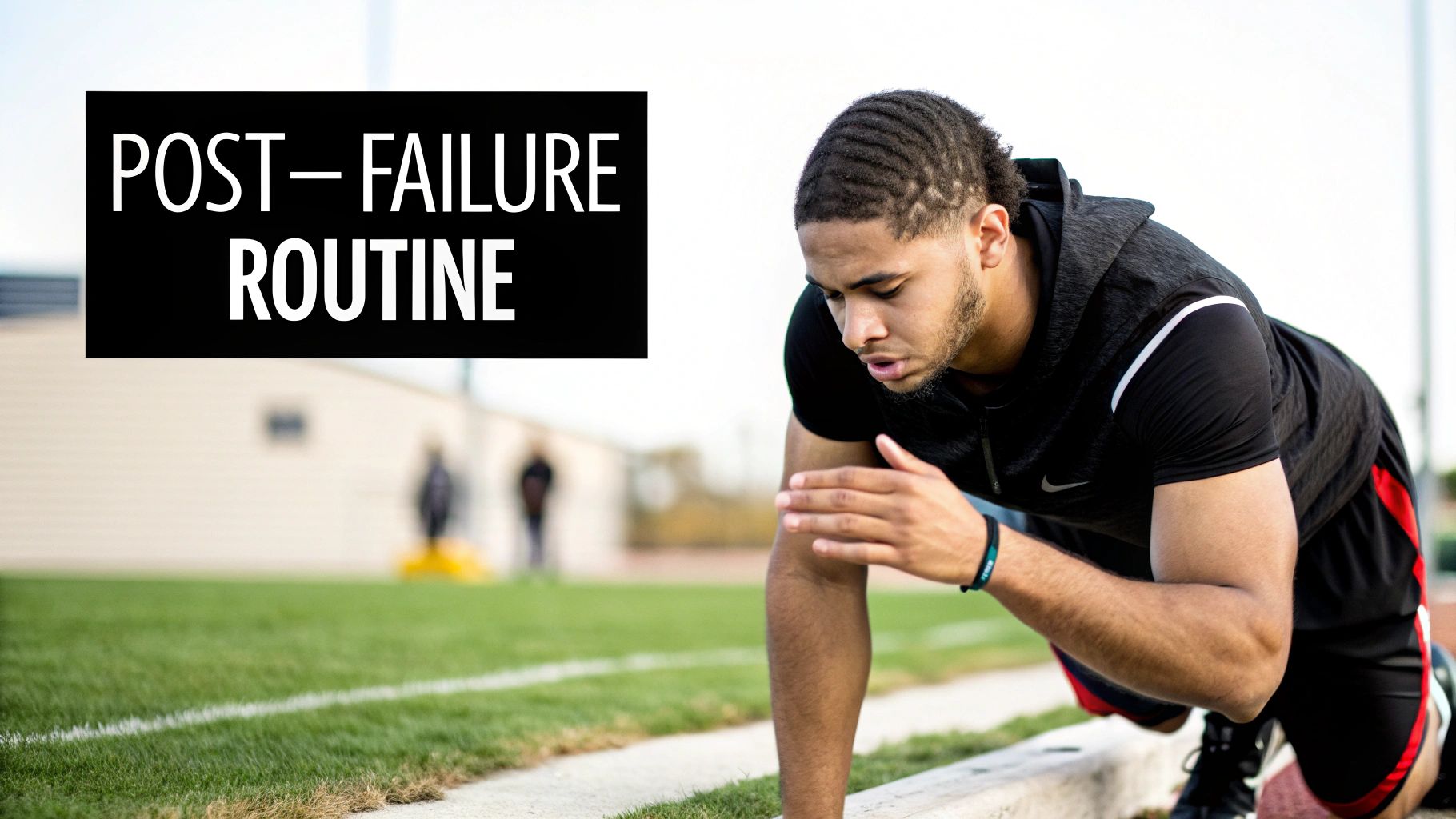
Develop a Post-Failure Routine
A warm-up gets your body ready; a post-failure routine gets your mind ready to move on. It’s a simple, repeatable sequence of actions you perform immediately after an error to hit the mental reset button. The goal is to create a buffer between the mistake and your next action, preventing one error from bleeding into another.
"Every mistake and every failure packs a powerful learning opportunity. If I quit trying or if I obsessed on the ‘failure’ of it and how I looked to others, I’d never get anywhere."
Your routine doesn't need to be complicated. In fact, it should be quick—just a few seconds.
- Physical Cue: A quick physical action signals to your brain that it's time to move on. Example: A tennis player might turn their back to the court and re-adjust their racket strings after an unforced error. It's a physical reset. It could be clapping your hands, adjusting your gear, or just taking one deep, deliberate breath.
- Mental Cue: Pair that physical action with a short, powerful mantra. Example: A basketball player who misses a free throw might tap their chest and say "Next one." This verbal cue reinforces the mental shift you're making.
When you practice this routine over and over in training, it becomes an automatic response in competition. It stops the emotional flood and keeps you locked in. Building these kinds of habits is a core part of effective mental skills training for athletes that builds true resilience over time.
Harness the Power of Visualization
Visualization, or mental rehearsal, is a go-to technique for elite athletes preparing for both success and adversity. It's about creating a vivid, detailed mental movie of a performance. But here’s the key for handling failure: you can use visualization to mentally rehearse successful comebacks, essentially rewiring your brain for confidence.
Don't just imagine a perfect performance. Spend time visualizing yourself making a mistake—and then recovering from it flawlessly.
Practical Visualization Exercise
- Find a quiet space and close your eyes.
- Imagine a specific scenario in your sport where you might mess up (e.g., a basketball player missing a crucial free throw, a gymnast stumbling on a landing).
- Allow yourself to feel that initial flash of frustration or disappointment. Acknowledge it.
- Now, vividly picture yourself executing your post-failure routine. See yourself take that deep breath, say your cue word, and refocus your eyes on the next task at hand.
- Finally, visualize yourself executing the very next play with perfect form and unshakable confidence.
By practicing this mental sequence repeatedly, your brain stops seeing recovery as a moment of panic. Instead, it becomes a practiced, automatic response. This builds a deep-seated belief that you can handle any setback the game throws at you. To truly cultivate this resilience, it’s also vital for athletes to focus on building lasting motivation for exercise, particularly when setbacks occur. These strategies are the foundation of a mentally tough competitor who doesn't just endure failure, but actually uses it to get better.
Navigating the Long-Term Toll of a Sports Career
A single missed shot or a tough loss can feel monumental at the moment, but some of the heaviest burdens in an athlete’s career show up long after the crowds have gone home. The real, lasting toll of high-impact sports often takes the form of chronic physical issues that can completely reshape an athlete's life for years. This kind of failure in sport isn’t about one bad play; it’s about the cumulative price the body pays for pushing its limits.
This isn’t just about the usual aches and pains, either. We're talking about debilitating chronic injuries, a significantly higher risk for serious health problems, and mental health battles that are directly tied to physical trauma like concussions. For any serious competitor, facing these realities head-on is crucial. It’s about shifting the focus from just winning today to building a healthy, resilient life for tomorrow.
The Hidden Physical Costs of Competing
The relentless drive to be the best puts an incredible amount of stress on the body, which can lead to conditions that stick around well into retirement. Many athletes find themselves dealing with major physical setbacks, and learning how to handle them is key to a long career. This includes everything from managing chronic injuries like Achilles tendonitis to more severe conditions. These aren’t just speed bumps; they are life-changing issues that demand constant attention.
In high-contact sports, the consequences can be even more profound. The latest research is painting a stark picture of the link between professional sports and serious neurological and cardiovascular problems. For a long time, we only talked about the immediate signs of a concussion, but now we have a much clearer—and more troubling—understanding of the devastating long-term fallout.
The physical sacrifices an athlete makes don’t end at retirement. Acknowledging the long-term risks is the first step toward building a sustainable and healthy life, both during and after a career in sports.
The Alarming Link to Long-Term Disease
The health data for former professional athletes is sobering, especially for those who played sports like football. The repeated head impacts and punishing physical demands lead to much higher rates of debilitating diseases compared to the general population. This connection brings a critical, often overlooked, part of an athletic career into sharp focus: preparing for life after the game.
For instance, a groundbreaking study of nearly 20,000 players found that former NFL athletes are a shocking four times more likely to die from ALS (Lou Gehrig's disease) than non-athletes. That same research showed they are also 2.5 times more prone to cardiovascular disease and nearly three times more likely to develop neurodegenerative illnesses. These are more than just numbers on a page; they represent a fundamental risk baked into the profession. You can dive deeper into these important findings on pro athlete health to understand the full scope.
Actionable Tip: Proactively manage your long-term health. Insist on comprehensive annual check-ups that include neurological and cardiovascular screenings. Keep detailed personal records of injuries, especially concussions, to share with future doctors. This isn't just about managing today's performance; it's about advocating for your future self. The same mental skills used to break a slump are what's needed to navigate these long-term health challenges.
Managing Post-Career Transitions and Identity Shifts
For many athletes I work with, the most profound sense of failure in sport isn't about one missed shot or a single loss. It’s the final whistle on their entire career. That transition away from professional competition is a massive psychological challenge, often bringing a jarring sense of loss and aimlessness.
When the game ends for good, the highly structured, competitive life that has defined your entire existence disappears. This often leaves a huge void. This shift can trigger a genuine identity crisis. For years, you were "the athlete." When that primary label is gone, the question becomes, "Who am I now?" It's a question that can be compounded by new financial pressures and the sudden absence of your support system of teammates and coaches.

From On-Field Skills to Off-Field Success
Here’s the good news: the very mental skills you spent years sharpening for elite competition are precisely the tools you need to navigate this next chapter. The resilience built from tough losses, the discipline forged in grueling training sessions, and the focus required to pursue goals are all directly transferable to building a new, fulfilling life.
Practical Tip: Create a "skills translation" list. On one side, write down your key athletic skills (e.g., "performing under pressure," "analyzing opponents," "team collaboration"). On the other side, write down how those skills apply to a business or personal context (e.g., "meeting tight deadlines," "market research," "project management"). This exercise makes your value outside of sports tangible.
Practical Steps for a Successful Transition
Successfully managing this phase means taking deliberate, concrete steps to build a new foundation for yourself. Being prepared is the best defense against the uncertainty that retirement brings.
- Explore New Interests: Use your off-seasons to experiment a little. Take a class, volunteer for a cause you believe in, or shadow someone in a field that sparks your curiosity. Example: An NFL player might take an online real estate course or get a coaching certification during the offseason to test the waters for a future career.
- Build Your Network: Make a point to connect with people outside your immediate athletic circle. Use platforms like LinkedIn to connect with alumni from your university who are in fields you find interesting. Ask for a 15-minute informational interview to learn about their journey.
- Seek Financial Guidance: The statistics on post-career financial distress are truly alarming. A staggering 78% of former NFL players face bankruptcy or severe financial stress within just two years of retirement, and 60% of ex-NBA players go broke within five years. Don't wait. Find a trusted financial advisor early and create a long-term plan. You can find more details on these post-career financial challenges for athletes.
Your athletic career equipped you with elite mental tools like focus, goal-setting, and resilience. The key to a successful transition is recognizing that these same skills are your greatest assets in building a meaningful life after sport.
By applying that same world-class dedication to your personal and professional growth, you can turn the end of one chapter into the exciting start of another. The game on the field might be over, but the mental game of life is just beginning—and you already know how to win.
Knowing When to Seek Professional Sports Psychology Support
Think about it: every elite athlete has a team of coaches dedicated to strength, conditioning, and technique. It only makes sense that the world's best also have coaches for their minds. Still, far too many competitors hesitate to get professional help for the mental side of their game, thinking they should be tough enough to handle it all alone.
Truthfully, knowing when to reach out isn't a sign of weakness—it's a sign of intelligence. It’s a strategic move to invest in your performance and, just as importantly, your well-being. Looking at failure in sport not as a dead end but as a signal that you need a new tool in your belt is a powerful shift in perspective.
Red Flags That Signal It Is Time for Help
While building mental resilience on your own is a great first step, some patterns are clear indicators that you've hit a wall self-guided strategies can't break through. If you're stuck in a negative loop, a sports psychologist provides the specialized expertise to help you get out. It's probably time to get in touch if you're experiencing any of these persistent issues.
- Chronic Performance Anxiety: That feeling of dread before a big game has gone from simple nerves to a consistent, performance-killing fear.
- Inability to Bounce Back: A tough loss or a bad performance has sent you into a slump you just can't shake, and your confidence is shot.
- Loss of Passion: The fire you once had for your sport has faded. Now it feels more like an obligation or a source of burnout.
- Difficulty Coping with Injury: You're finding it incredibly hard to deal with the mental and emotional toll of a major injury and the long road to recovery.
These aren't just "off days." They are clear signs that your mental game needs a dedicated coach.
What to Expect from a Sports Psychologist
Working with a professional takes the mystery out of mental training. They offer a structured, completely confidential space to dig into the real reasons behind your performance blocks. The entire point is to build you a mental toolkit that's customized to your needs, giving you a real competitive edge.
Seeking support isn’t a sign of weakness; it's a strategic investment in your performance and well-being. It is about adding an expert to your team who is dedicated to sharpening your greatest competitive asset: your mind.
A good sports psychologist helps you go way beyond generic advice. They use targeted interventions designed just for you. Example: If you struggle with pre-game anxiety, a psychologist might teach you specific breathing techniques like "box breathing" (inhale for 4 seconds, hold for 4, exhale for 4, hold for 4) to calm your nervous system. They might also help you develop a personalized pre-performance routine to create a sense of control and focus. The process is practical and goal-oriented.
To see what that looks like, you can learn more about professional sports psychology consulting and discover how personalized coaching can elevate your game.
Answering Your Questions About Failure in Sport
Let's tackle some of the most common questions I hear from athletes, coaches, and parents about navigating setbacks. The goal here isn't just to get over the disappointment of a failure in sport—it's to find the forward-thinking solutions that build true mental toughness.
How Can a Coach Help an Athlete Recover from a Major Failure?
First and foremost, a coach's job is to create a space where failure is seen as information, not a final verdict. It’s about building psychological safety. When an athlete feels safe, they can be honest about what went wrong without fear of blame.
Actionable Tip for Coaches: Implement a "24-Hour Rule." After a tough loss, no one is allowed to analyze the game—not players, not coaches. This gives everyone time for emotions to settle. The next day, you can approach the film session with a clear, learning-focused mindset. Ask productive questions like, "What did we learn here?" or "What's one small thing we can sharpen in practice this week based on this?" This shifts the focus from blame to genuine growth.
What Is the Difference Between a Slump and Burnout?
This is a critical distinction. A slump is usually a temporary dip in performance. The athlete is still motivated and trying, but they're struggling with their timing, confidence, or mechanics. It's fundamentally a performance problem, and it can often be fixed with technical tweaks, video analysis, and confidence-building drills.
Burnout is much deeper. It's a state of complete emotional, mental, and physical exhaustion brought on by chronic stress. You'll see signs like a total loss of enjoyment in the sport, a feeling of being detached, and a diminished sense of personal accomplishment. While a bad slump can certainly contribute to burnout, burnout itself demands a serious recovery plan centered on rest, stress management, and finding the joy in the game again.
A slump is a problem with your game; burnout is a problem with your relationship to the game. Recognizing the difference is the first step toward the right recovery plan.
Can Parents Help Their Child Deal with Failure in Sport?
Absolutely—and their role is huge. The most impactful thing a parent can do is model a healthy response to failure. That dreaded car ride home after a tough loss? Resist the urge to become the analyst and break down every mistake.
Instead, lead with the six most powerful words you can say: "I love watching you play."
This simple phrase communicates that your love is unconditional and has nothing to do with the final score. Practical Tip: After saying those words, let your child lead the conversation. If they want to talk about the game, listen without interrupting or offering immediate solutions. Ask open-ended questions like, "How did that feel for you?" This helps them process their own emotions and shows that you trust their ability to learn and grow from the experience.
Are you ready to turn setbacks into your greatest competitive advantage? Dr. John F. Murray offers expert sports psychology consulting to help athletes at all levels build the mental skills needed for elite performance. Strengthen your resilience, sharpen your focus, and unlock your full potential by visiting https://www.johnfmurray.com.