

When people talk about improving mental stamina, they’re really talking about training the brain to stay focused, handle stress, and perform at a high level when the pressure is on. It’s not magic. It’s a skill built on a combination of strategic mental training, solid physical well-being, and smart recovery practices. Get these three areas right, and you’ll find you can push through just about any cognitive challenge that comes your way.
What Mental Stamina Actually Is and Why It Matters

Mental stamina isn’t some mystical quality that only elite athletes or special forces operators have. It’s a very practical, trainable ability to keep your cognitive performance high, even when you’re tired, stressed out, or facing a monster of a task.
Think of it as the mental version of physical endurance. A marathon runner trains their body to grind out 26.2 miles. In the same way, you can train your mind to stay sharp through a brutal project deadline or a high-stakes presentation. This all comes down to strengthening your brain’s executive functions—the command center that handles things like attention control, emotional regulation, and working memory.
Why Cognitive Endurance Is a Game-Changer
With high mental stamina, you can tune out distractions, wrestle with complex problems, and make clear-headed decisions when the heat is on. This kind of resilience is crucial in just about every part of life.
Take a startup founder pitching to investors. They have to stay calm, articulate, and convincing, even with a dozen skeptical eyes on them. Or think of a student cramming for final exams, needing to absorb and recall a mountain of information over several intense days. In both situations, it’s not just about what you know. It’s about having the mental endurance to perform when it counts.
Mental stamina is your capacity to resist distraction, stay focused on your objective, and sustain effort over the long haul. It’s the difference between merely knowing what to do and having the mental fortitude to actually do it.
The Pillars of Mental Fortitude
Building this skill isn’t about just gritting your teeth and pushing harder. It’s about a smarter, more balanced approach that recognizes the deep connection between mind and body. The core components are what I call the pillars of mental stamina.
Here’s a quick look at the core components you need to build and maintain mental stamina. This table summarizes the key strategies we’ll cover.
| Pillar | Core Principle | Example Action |
|---|---|---|
| Strategic Mental Training | Strengthening the brain’s focus and resilience through targeted exercises. | Work for 25 minutes, then take a 5-minute break. |
| Foundational Physical Well-being | Your brain’s health is directly tied to your body’s condition. | Going for a brisk 20-minute walk during your lunch break to clear your head. |
| Intelligent Recovery | Mental energy is a finite resource that needs to be replenished. | Setting a “hard stop” time for work each evening to prevent burnout. |
| Emotional Regulation | Managing emotional responses to stress to maintain cognitive clarity. | When feeling frustrated, take three deep breaths before reacting to a difficult email. |
This isn’t just theory—it’s backed by solid evidence. We know, for instance, that regular physical exercise has a massive impact on mental stamina. A huge global study by ASICS covering over 26,000 people found that those who were physically active scored an average of 67 out of 100 on a mental well-being scale. The inactive group? They scored just 54. That’s a huge gap, and it hammers home the mind-body connection.
These principles are the bedrock of modern sports psychology, a field that has developed powerful tools for anyone—not just athletes—looking to elevate their game.
How to Track Your Progress Effectively
Getting your baseline is just the first step. The real magic happens when you start tracking your progress. Without consistent measurement, it’s way too easy to lose motivation because you can’t actually see how far you’ve come. You don’t need any fancy software for this; a simple journal or a notes app on your phone works perfectly.
Here are two dead-simple methods for tracking your journey:
- The Daily “Mental Wins” Entry: At the end of each day, take two minutes. Just two. Write down one specific instance where you successfully handled a mental challenge. Example: “Ignored the urge to check social media during my 25-minute work block.” or “Stayed calm when a client threw a last-minute curveball.” Documenting these small victories hardwires positive habits and builds momentum.
- Weekly Stamina Check-In: Once a week, pull out that Mental Stamina Scorecard again and re-rate yourself. You’re not going to see massive leaps overnight, but over a few weeks, you’ll start to notice the numbers trending up. This regular check-in keeps your goals front and center and helps you tweak your training based on what’s actually working.
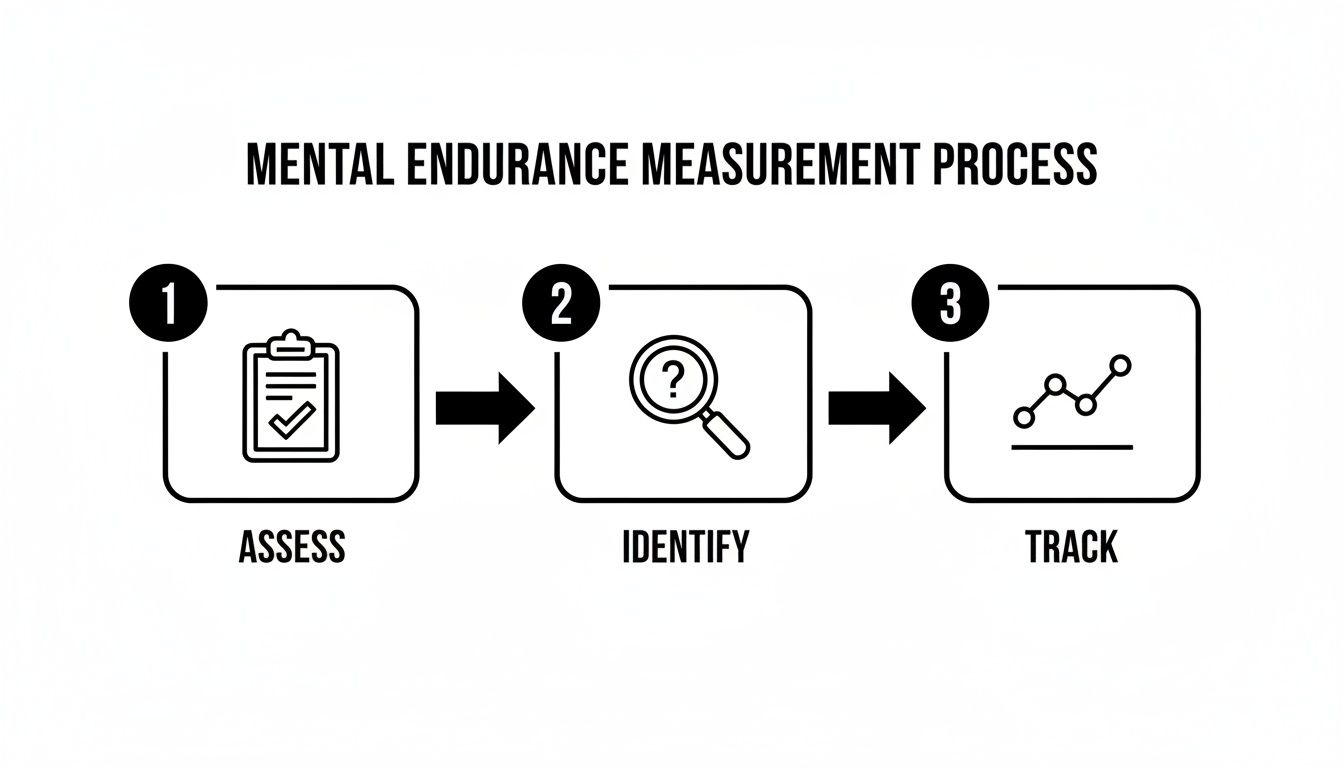
This simple cycle of assessing, identifying, and tracking creates a powerful feedback loop. It transforms the abstract goal of building mental endurance into a measurable, personalized, and—most importantly—achievable mission.
Fuel Your Brain to Fight Mental Fatigue

You can have the most sophisticated mental drills in the world, but they’ll fall flat if your brain is running on fumes. I’ve seen it time and time again: high-performers neglecting the absolute bedrock of mental stamina—sleep, nutrition, and exercise.
You simply can’t build a resilient mind on a depleted body. This isn’t about chasing perfection. It’s about recognizing the direct, scientific link between your physical state and your cognitive endurance. Small, consistent investments here pay huge dividends in focus, clarity, and the ability to fight off fatigue when the pressure mounts.
Master Your Sleep for Mental Restoration
Sleep isn’t just downtime; it’s an active process of mental and neurological restoration. While you rest, your brain is hard at work clearing out metabolic waste, consolidating memories, and recharging the circuits that govern focus and emotional regulation. Skimp on sleep, and you’re starting the day with a cognitive handicap.
The single best way to improve your sleep hygiene is consistency. Try to go to bed and wake up around the same time, even on weekends. It works wonders for stabilizing your circadian rhythm.
Here are a few other actionable things you can implement tonight:
- Create a Power-Down Hour: Dedicate the last 60 minutes before bed to screen-free activities. Practical Tip: Set a recurring “wind down” alarm on your phone for one hour before your target bedtime. When it goes off, plug your phone in to charge—outside the bedroom if you can—and switch to reading a physical book or listening to calm music.
- Optimize Your Environment: Your bedroom should be a sanctuary for sleep—cool, dark, and quiet. Blackout curtains and a white noise machine can make a massive difference.
- Avoid Late-Night Stimulants: That evening coffee or high-intensity workout can keep your nervous system wired for hours. As a rule of thumb, avoid caffeine after 2 PM and schedule intense exercise for earlier in the day.
Your Top Questions About Building Mental Stamina
As you start putting these mental training ideas into practice, you’re bound to have questions. It’s only natural. This is your go-to guide for the most common curiosities and roadblocks I see pop up with clients on this journey. Getting these things cleared up from the start helps you stick with the program and stay motivated.
Let’s dive into some of the questions I hear all the time.
How Long Until I Actually See Improvements?
This is usually the first thing people ask, and for good reason. You want to know if the effort is paying off. While everyone’s brain is different, you’ll likely feel small, noticeable shifts within the first 2-3 weeks of consistent practice. It won’t be a lightning bolt moment. It’s more subtle—like realizing you can hold your focus a bit longer, or you’re not as thrown off by a minor hiccup in your day.
The bigger, more durable improvements—the kind where you can truly handle major pressure and maintain high-level focus for extended periods—tend to show up after 2-3 months of dedicated training. This isn’t a race. You’re literally forging new connections in your brain, and that takes time and repetition. The real secret is consistency, not intensity.
Can I Really Build Mental Stamina with a Packed Schedule?
Absolutely. In fact, most of the people I work with are incredibly busy. You don’t need—and probably don’t have—hours to set aside for this. The key for busy people is to weave “micro-habits” into the day you’re already living. It’s all about finding those little pockets of time to train your mind.
Here are a few quick, practical examples that take just a couple of minutes:
- The Two-Minute Focus Drill: Before jumping into a new task, set a timer for just two minutes. Do nothing but focus on your breathing. This simple habit trains your brain to make intentional transitions instead of frantically lurching from one thing to the next.
- The “What’s Next?” Reframe: When you feel that wave of overwhelm hit, just pause and ask yourself, “What is the one small, productive thing I can do right now?” This question cuts through the mental clutter and shifts you from feeling paralyzed into taking action, even if that action is just answering a single email.
- Stairwell Stress Reset: Just got off a tense call? Skip the elevator and take the stairs. Use that short burst of physical activity to consciously let go of the tension from that conversation.
None of these are huge time commitments. But when you do them consistently, day after day, they compound into serious gains in your mental endurance.
What’s the Biggest Mistake People Make?
Hands down, the single biggest mistake is treating mental training like a sprint when it’s a marathon. I see people get really fired up at the start, pushing themselves with back-to-back intense focus sessions, but they completely ignore the most critical piece of the puzzle: recovery. They try to just power through fatigue, thinking that’s what mental toughness is all about.
Pushing your brain to its limit without planned recovery isn’t building stamina; it’s just burning yourself out faster. True mental endurance requires a rhythm of stress and rest, just like physical training.
When you ignore recovery, you get diminishing returns, make more mistakes, and eventually hit a wall. You have to schedule downtime. That means protecting your sleep, taking actual breaks during the day (away from screens!), and letting your mind wander. This isn’t being lazy—it’s a strategic part of the process that allows your brain to consolidate what it’s learned and recharge for the next challenge.
For more information on mental performance coaching or psychological services, or to schedule a consultation, visit my Sports Psychology Services page.