

When we talk about sports mental health, we’re talking about getting an athlete’s mind in peak condition. It’s about building up crucial psychological skills like focus, confidence, and emotional control, recognizing that an athlete’s mind is just as vital as their physical strength.
This isn’t about fixing problems after they appear. It’s a proactive approach that treats mental fitness as a core part of an athlete’s daily training regimen. For example, just as you schedule time for weightlifting, you should schedule 10 minutes a day for mindfulness or visualization exercises to build mental muscle.
Why Mental Fitness Is the New Physical Fitness

For decades, athletic training was almost entirely about the body—building stronger muscles, running faster, and perfecting physical technique. The mind was often just an afterthought, something you were expected to “toughen up” through grueling drills alone.
That whole view is changing, and fast. We now understand that an athlete’s mind is a high-performance engine. It needs consistent tuning and maintenance, not just a quick fix when it breaks down.
Making mental fitness a priority isn’t a sign of weakness; it’s a non-negotiable part of modern athletic development and a true display of strength. Sustained excellence in any sport comes down to performing under immense pressure, and that ability is forged through deliberate mental preparation.
The Bedrock of Sustained Performance
Picture two athletes with the exact same physical gifts. The first is rattled by a single mistake, losing focus and falling apart for the rest of the game. The second uses that same mistake as a trigger to reset, refocus, and execute the next play flawlessly.
The difference isn’t physical. It’s all mental.
Effective sports mental health strategies equip athletes with the tools to handle the intense psychological demands of competition. These skills include:
- Resilience: The ability to bounce back from errors, losses, or injuries. Practical Tip: After a mistake, use a physical reset cue, like tapping your wrist, coupled with a mental mantra like “Next play.” This anchors you in the present moment.
- Pressure Management: Techniques to stay calm and sharp when the stakes are highest. Practical Tip: Develop a pre-performance routine—a consistent sequence of actions and thoughts—to signal to your brain that it’s time to compete.
- Sustained Motivation: Keeping that deep-seated love for the game alive, even through exhausting training cycles. Practical Tip: Set process goals (e.g., “improve my free-throw form”) instead of just outcome goals (e.g., “win the championship”) to stay engaged daily.
- Confidence: Building an unshakeable belief in your abilities. Practical Tip: Keep a “highlight reel”—a mental or written log of your best plays and successes—to review before a competition.
These qualities don’t just magically appear. They are trained, practiced, and refined with the same dedication as any physical skill. You can learn more about how this is achieved through dedicated mental training for peak performance.
The conversation around mental health in sports is shifting from crisis intervention to proactive mental fitness. The goal is to build psychological armor that not only protects athletes from mental health challenges but also helps them thrive under pressure.
This guide will break down actionable strategies for everyone in an athlete’s corner—from the players themselves to their coaches, parents, and support staff. We’ll dive into common hurdles like performance anxiety and the psychological toll of injuries, providing a clear path toward building a winning mindset both on and off the field.
The Hidden Opponents Every Athlete Faces
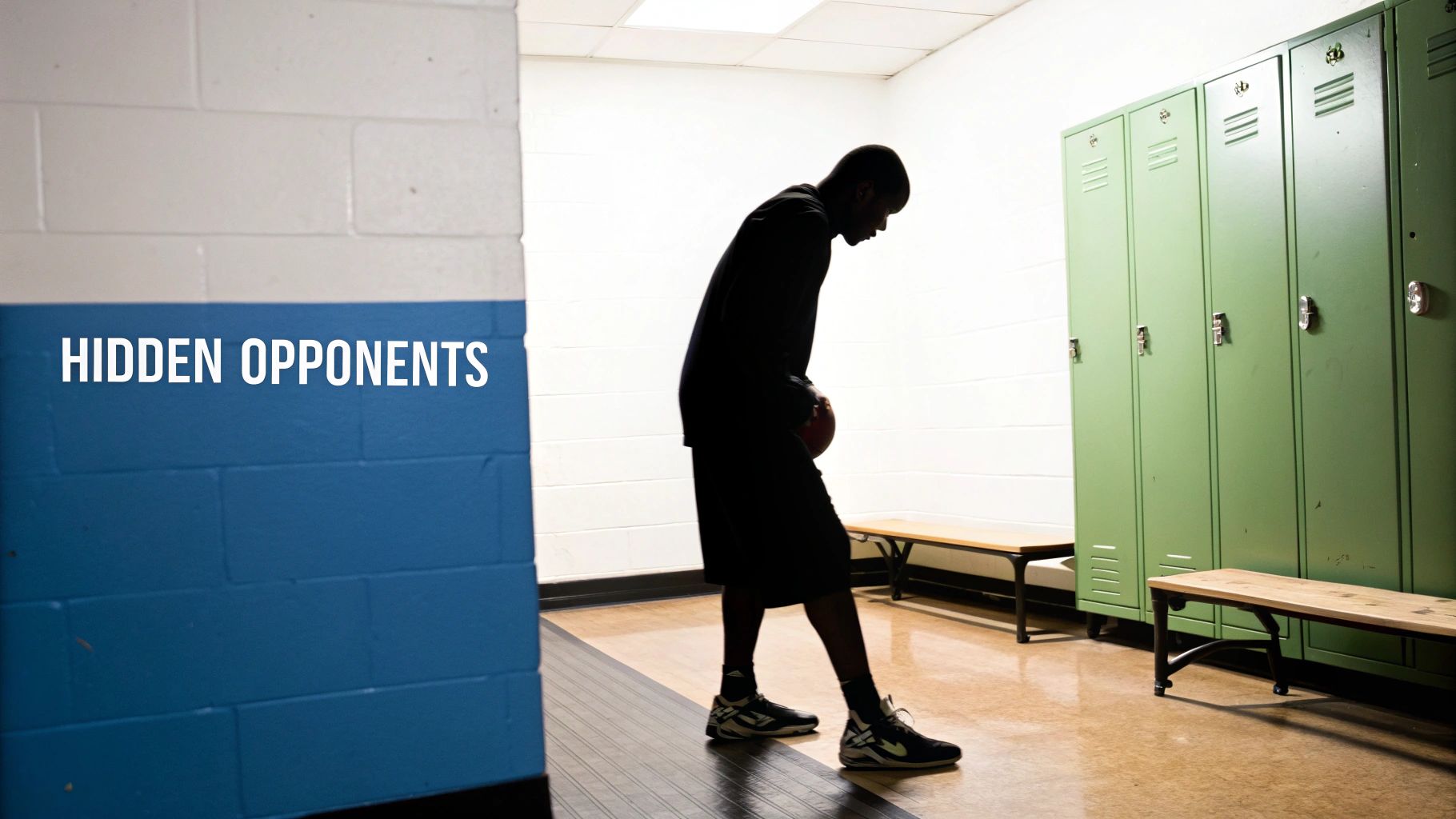
Every athlete trains to beat the person across the net, the team on the other side of the field. But the toughest battles? Those are often fought inside their own head. These hidden opponents—anxiety, burnout, the psychological gut punch of an injury—can do more damage than any competitor ever could.
Getting a handle on these challenges is the first step toward building true sports mental health.
The pressure to win can feel relentless. We celebrate athletes for their physical grit, but the mental load they carry often goes completely unnoticed. And that pressure takes a serious toll.
One major review found that up to 34% of elite athletes grapple with symptoms of anxiety or depression. That figure is right on par with, or even higher than, the general population. It’s a stark reminder that being in peak physical condition doesn’t make you immune to mental health struggles.
A huge part of the problem is stigma. Athletes are conditioned to see any emotional vulnerability as a sign of weakness, which keeps them from getting help until things reach a breaking point. You can dig deeper into the mental health challenges facing young athletes to see just how widespread this issue is.
Performance Anxiety: The Fear of Failure
This is so much more than just a case of pre-game jitters. Performance anxiety is a paralyzing fear of messing up, and it has the power to completely sabotage an athlete’s natural talent. It shows up physically as a racing heart or tense muscles and mentally as a flood of self-doubt.
Example: A star basketball player nails free throws all day in practice, but when the game is on the line, their muscles tighten and they suddenly can’t buy a basket. The fear of letting everyone down creates a mental roadblock, turning a simple, practiced motion into a monumental task.
This becomes a vicious cycle. The athlete worries about making a mistake, which makes their body tense up, which makes a mistake more likely. That just cements the fear for the next time the pressure is on. Actionable Tip: To break this cycle, shift focus from the outcome (making the shot) to the process (the feeling of a smooth release, the follow-through). This external focus can quiet the internal chatter.
Burnout: When the Passion Just Dies
There’s a world of difference between being exhausted and being burned out. Exhaustion is physical—you’re wiped out after a brutal week of training. Burnout, on the other hand, is a state of chronic emotional, mental, and physical depletion caused by unrelenting stress.
It often comes with a feeling of detachment from the sport you once poured your heart into. For an athlete, burnout feels like the fire has gone out, replaced by a sense of apathy or even resentment toward the very thing that used to define them.
Burnout isn’t just about being tired; it’s a loss of identity and purpose. It happens when the demands of the sport consistently outweigh the rewards, leading to a deep sense of emotional depletion.
Example: A college swimmer who, after years of 5 a.m. practices, just doesn’t feel it anymore. They show up, they go through the motions, but the drive is gone. This isn’t laziness. It’s a serious mental hurdle. Actionable Tip: To combat burnout, deliberately schedule non-sport-related activities into your week to cultivate other parts of your identity. Rekindling hobbies or spending time with friends can restore balance.
The Mental Toll of Injury Recovery
Getting injured isn’t just a physical setback; it’s a profound psychological one. The recovery process can be incredibly lonely. It rips away an athlete’s routine, their connection to teammates, and their entire identity. One day you’re the starting pitcher, the next you’re just… “injured.”
That sudden shift can trigger a wave of frustration, anxiety, and even depression. Here are common examples and actionable tips:
- The Identity Crisis: A soccer player with a season-ending ACL tear feels completely lost. Without the game, who are they? Actionable Tip: Use the recovery time to explore other interests or skills. Mentor a younger player or volunteer, staying connected to the sport in a new role.
- The Isolation: A gymnast recovering from a stress fracture watches from the sidelines, feeling forgotten. Actionable Tip: Make a point to attend team meetings and events, even if you can’t practice. Communicate with your coach about ways to stay involved.
- The Fear of Re-Injury: A runner who is physically cleared hesitates to push their limits, haunted by fear. Actionable Tip: Work with a physical therapist to set small, incremental performance goals. Each small success rebuilds trust in your body.
Making it back to the field requires more than just physical rehab. It’s about rebuilding confidence, trust in your own body, and the mental strength to perform without fear.
Actionable Strategies for Building Your Mental Toolkit
Knowing the challenges is one thing, but making real progress requires action. The best athletes I’ve worked with treat their minds just like any other muscle—they train it consistently with specific exercises and routines. This is where we get practical and start building your mental toolkit, a set of go-to strategies to strengthen your sports mental health and elevate your game.
Think of it as a gym bag for your mind. Just as you have different equipment for strength, speed, or endurance, you need a variety of mental tools to handle the pressures of competition. These aren’t quick fixes; they are skills you build over time through dedicated practice.
Reframe Your Inner Critic with CBT Techniques
That negative voice in your head? It can be an athlete’s worst enemy. A single mistake can easily trigger a downward spiral of self-criticism that completely drains your confidence. This is where Cognitive Behavioral Therapy (CBT) comes in, offering simple but powerful techniques to intercept and reframe those destructive thoughts.
The core idea is to learn how to catch negative thoughts in the act, challenge their validity, and replace them with something more constructive. You essentially become the coach of your own mind.
A simple CBT-based drill I use with clients is the “Catch It, Check It, Change It” method:
- Catch It: Become aware of the negative thought as it pops up. For instance, after missing a crucial free throw, you might think, “I always choke under pressure.”
- Check It: Question that thought. Is it really true? Have you never succeeded under pressure before? The answer is almost always a hard no. Find evidence that contradicts the thought.
- Change It: Swap the negative thought for a realistic, productive one. Instead of “I always choke,” try, “That shot didn’t fall, but I know what to adjust. Focus on the next play.”
Practicing this mental drill consistently retrains your brain to respond to setbacks with focus, not frustration.
Master Your Performance with Visualization
Visualization, or mental rehearsal, is a staple for countless elite athletes, and for good reason. It involves creating a vivid, detailed mental movie of yourself executing your skills perfectly. Your brain has a tough time telling the difference between a real event and an intensely imagined one, so this practice actually helps build the neural pathways for success.
Practical Example: A tennis player I coached would spend ten minutes before every match mentally rehearsing his serve. He’d visualize the entire sequence in first-person: the feel of the racquet in his hand, the perfect toss, the explosive contact, and the sight of the ball landing right where he wanted it. This primes both the mind and body to perform.
Visualization isn’t just wishful thinking; it’s a deliberate mental simulation. By repeatedly running through successful scenarios, you build confidence and muscle memory without any physical strain, making it a powerful tool for both training and recovery.
Sharpen Your Focus with Mindfulness Drills
Your attention is like a muscle—the more you train it, the stronger and more reliable it becomes. Mindfulness exercises are the weightlifting of mental focus, teaching you to stay grounded in the present moment and tune out the noise. In sports, where a momentary lapse can decide the outcome, this skill is absolutely critical.
Here are a few actionable focus drills you can start using today:
- Box Breathing: Inhale for four seconds, hold for four, exhale for four, and hold for four again. This simple breathing rhythm calms your nervous system and yanks your attention back to the present. It’s perfect for a timeout or the moments between points.
- Sensory Check-In: Wherever you are, take 30 seconds to notice 5 things you can see, 4 things you can feel, 3 things you can hear, 2 things you can smell, and 1 thing you can taste. This grounds you in your immediate environment, pulling your mind away from anxious chatter.
- Focus Point: Pick a stationary object (like a spot on the wall or a blade of grass) and focus all of your attention on it for 60 seconds. When your mind wanders, gently guide it back.
For a deeper dive, you can find a curated list of the best books on sports psychology that explore these concepts in much greater detail.
Here’s a quick reference table to help you get started with these powerful mental tools.
Actionable Mental Health Strategies for Athletes
| Technique | Primary Benefit | First Action Step |
|---|---|---|
| CBT (Catch, Check, Change) | Interrupts negative self-talk and stops confidence spirals. | Next time you make a mistake in practice, immediately identify the negative thought and consciously replace it with a neutral, forward-looking one. |
| Visualization | Builds confidence and muscle memory without physical practice. | Before bed, spend 5 minutes vividly imagining yourself perfectly executing one key skill from your sport, from start to finish. |
| Mindfulness (Box Breathing) | Calms nerves and refocuses attention in high-pressure moments. | The next time you feel frustrated or overwhelmed, take 60 seconds to complete 3-4 rounds of the box breathing exercise. |
| Resilience Reframing | Turns setbacks into learning opportunities instead of failures. | After your next tough practice or loss, write down one specific lesson you learned and one adjustment you can make for next time. |
These aren’t just abstract ideas; they are practical skills you can start building today to immediately impact your performance and well-being.
Cultivate Resilience to Bounce Back Stronger
Resilience is the absolute cornerstone of a strong mental game. It’s not just about withstanding adversity; it’s about using it as fuel for growth. Building true resilience means changing your relationship with failure and learning to practice self-compassion.
Instead of seeing a loss as a final judgment on your worth, reframe it as a data point. What did you learn? Where are the opportunities to get better? A resilient team might hold a “lessons learned” session after a tough loss, focusing entirely on constructive feedback and future strategy rather than placing blame. To sustain high performance, athletes can benefit from learning effective strategies for building emotional resilience.
Self-compassion is just as vital. Athletes are often their own harshest critics, which can be paralyzing. You have to learn to treat yourself with the same encouragement you’d offer a teammate. This isn’t about making excuses; it’s about acknowledging your effort and accepting that setbacks are a non-negotiable part of the journey to excellence.
How Coaches and Parents Can Build a Winning Environment
An athlete’s success is never a solo act. Behind every great performance, there’s a support system—coaches, parents, and administrators—working to build an environment where athletes can thrive both mentally and physically. Creating this positive ecosystem is one of the most critical aspects of promoting strong sports mental health.
The focus has to shift from just demanding results to proactively nurturing the person behind the athlete. This means creating a space where it’s safe to be vulnerable, to struggle, and to ask for help without fear of judgment. A supportive environment doesn’t just protect athletes; it unlocks their full potential.
The Coach as a Mental Health Ally
Coaches hold an immense amount of influence over an athlete’s psychological well-being. Your words and actions can either build an athlete up or tear them down. Moving beyond the X’s and O’s to become a mental health ally is a true game-changer for your team.
Start by fostering psychological safety. This is about creating a culture where athletes feel comfortable speaking up about their struggles, whether it’s a physical injury or a mental health concern. A simple, actionable way to do this is to normalize these conversations.
- Schedule regular check-ins: Dedicate a few minutes at the start or end of practice to ask athletes how they’re doing—not just as players, but as people. Use a simple 1-10 scale: “On a scale of 1-10, where’s your energy today?”
- Model vulnerability: Share a brief, appropriate story about a time you struggled with pressure or a setback. When a leader shows it’s okay to not be okay, it gives others permission to do the same.
- Integrate mental skills: Weave a two-minute breathing exercise or a brief visualization drill into your regular warm-ups. This treats mental prep as a standard part of training, just like physical conditioning.
The diagram below shows some of the core tools in an athlete’s mental toolkit that coaches can help develop.
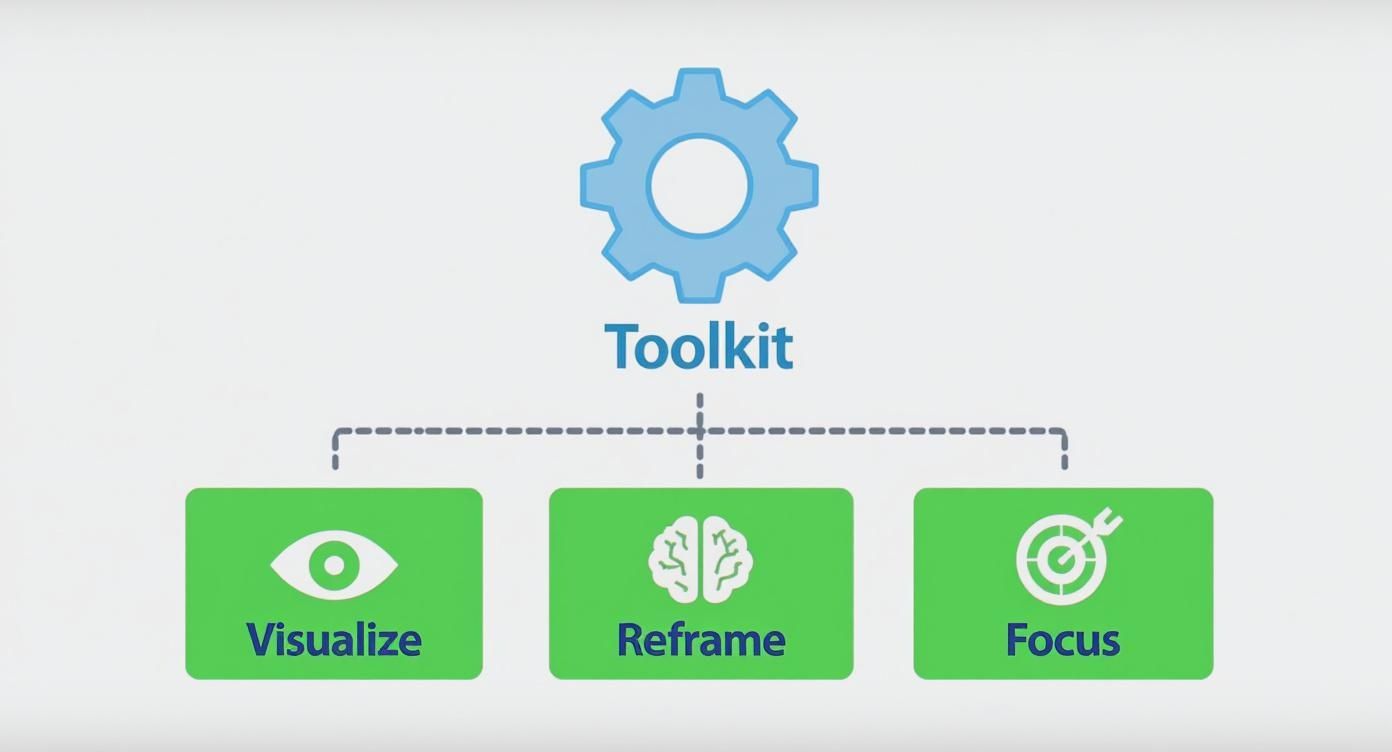
This visual breaks down how fundamental skills like visualization, reframing negative thoughts, and maintaining focus are essential components of an athlete’s mental game.
The Parent as a Source of Unconditional Support
For parents, navigating the line between encouragement and pressure is a delicate balance. Your main job is to provide a stable, loving foundation that isn’t dependent on wins or losses. Your child’s identity is so much more than their athletic achievements.
Focus your praise on effort, not just outcomes. Celebrating hard work, resilience, and good sportsmanship reinforces values that last a lifetime, no matter what the scoreboard says. For example, instead of saying “You were the best player out there,” try “I was so impressed with how hard you worked on defense today.”
Your child’s worth should never be tied to their performance. The most powerful message a parent can send is simply, “I love watching you play,” because it completely separates your love from their results.
Keep perspective. Remember, youth sports are a vehicle for development, teaching lessons about teamwork, discipline, and overcoming adversity. When that remains the focus, the pressure to win becomes far less overwhelming for everyone.
Building a System That Prioritizes Wellbeing
While individual coaches and parents are crucial, real change demands a systemic approach from sports organizations. Creating a culture that values sports mental health starts at the top. This means implementing clear policies and providing accessible resources for every single athlete.
Unfortunately, a huge gap often exists between recognizing the importance of mental health and taking meaningful action. Surveys show that while over half of athletes see mental health as a priority, only 59% of men’s sports teams and 50% of women’s sports teams believe their coaches take their concerns seriously. This highlights a critical disconnect that organizations must address. You can read the full research on athlete perceptions to understand the full scope of this challenge.
To close this gap, organizations can:
- Provide Confidential Resources: Partner with sports psychologists or therapists and make their services easy and confidential for all athletes to access. Actionable Tip: Put contact info for mental health resources directly on team schedules and in locker rooms.
- Educate Staff: Run mandatory annual workshops for coaches and athletic staff on recognizing the early signs of mental distress and knowing how to respond appropriately.
- Promote a Healthy Culture: Establish clear policies that encourage rest and recovery, prevent burnout, and destigmatize seeking help. Actionable Tip: Implement a “mental health day” policy, treating mental rest as seriously as physical recovery.
Building a winning environment is a team effort. When everyone in an athlete’s circle commits to prioritizing mental wellbeing, you create a foundation for sustained success and, more importantly, a lifelong love of the game.
Recognizing When to Ask for Professional Support
Mental skills training gives you a powerful toolkit for handling the day-to-day grind of competition. But just like a physical injury, sometimes your own strategies aren’t enough. Recognizing when you need to call in a professional isn’t a sign of weakness—it’s a sign of strength and a smart move for your long-term sports mental health.
Knowing when to make that call can be tough, but certain red flags are hard to ignore. These aren’t just signs of a bad day; they’re persistent patterns that start messing with your life, both on and off the field.
Key Signs You May Need Professional Help
Pay close attention if you or a teammate are dealing with several of these for more than a few weeks:
- Persistent Low Mood or Irritability: You just feel down, hopeless, or unusually angry for weeks at a time.
- Loss of Enjoyment: The sport you used to love now feels like a chore, or worse, something you dread.
- Dramatic Changes in Habits: Your sleep, appetite, or energy levels are all over the place for no clear reason.
- Social Withdrawal: You find yourself pulling away from teammates, friends, and family.
- Overwhelming Anxiety: Constant worry or performance anxiety is getting in the way of training or competing effectively.
If these sound familiar, the mental hurdles you’re facing might require more specialized support than self-help techniques can offer. For athletes navigating these complex issues, specialized help like sports athlete counselling can provide guidance that’s tailored to their unique world.
Finding the Right Professional for You
Once you’ve decided to get help, the next step is finding the right person. The world of mental health has different kinds of professionals, each with a unique focus. Knowing the difference helps you make the right choice.
Sports Psychologist vs. Clinical Therapist
| Professional Type | Primary Focus | Best For |
|---|---|---|
| Sports Psychologist | Performance enhancement, mental skills (focus, confidence), and navigating sport-specific pressures. | Athletes looking to break through performance blocks, build mental toughness, or prepare for big competitions. |
| Clinical Therapist | Diagnosing and treating mental health conditions like anxiety, depression, and trauma. | Athletes whose struggles go beyond performance and are seriously impacting their daily life and overall wellbeing. |
Many professionals are skilled in both areas, but it’s crucial to find someone who gets the unique pressures athletes face. Don’t be afraid to ask about their experience working with athletes in your specific sport or at your level. Younger competitors, in particular, face a unique set of challenges and require a specialized approach. You can dive deeper into this with our specific guide on psychological counseling for teen athletes.
“Stigma is a significant barrier to care. According to the American College of Sports Medicine, approximately 30% of female and 25% of male student-athletes report having anxiety, yet only 10% seek professional help.”
This gap is a huge problem, and it shows why we need to normalize these conversations. The data doesn’t lie: elite athletes face even higher rates of burnout, depression, and anxiety from the relentless pressure to perform. Acknowledging these struggles and reaching out for support isn’t giving up—it’s one of the smartest things you can do for a long and successful athletic career.
Common Questions About Sports Mental Health
When you’re deep in the world of competitive sports, it’s natural to have questions about the mental side of the game. I get them all the time from athletes, parents, and coaches. Let’s clear up some of the most common concerns about sports mental health, bust a few myths, and give you some practical answers you can use right away.
What Is the Difference Between a Sports Psychologist and a Therapist?
This is a great question, and the distinction is crucial. A sports psychologist is laser-focused on one thing: performance enhancement. We use mental skills training—things like visualization, focus control, and confidence-building routines—to help athletes unlock their absolute peak potential.
A clinical therapist, on the other hand, is trained to diagnose and treat mental health conditions like clinical anxiety, depression, or trauma. Their primary focus is on your overall psychological wellbeing, not just your performance on the field.
Practical Tip: Think of it like this: a strength coach builds your muscles for competition (sports psychologist), while a doctor treats an illness (therapist). Both are vital for a healthy, high-performing athlete.
How Can I Talk to My Coach About My Mental Health?
Bringing this up with a coach can feel intimidating, but it’s a massive step toward taking control of your wellbeing. The key is to plan ahead and be clear about what you need.
Actionable Tip: Find a good time when your coach isn’t distracted—perhaps before or after practice—and ask for a private moment. Use “I” statements to explain what you’re feeling. For example, instead of saying “I’m stressed out,” try something specific: “Coach, I’ve been feeling pretty overwhelmed lately, and I’ve noticed it’s making it hard for me to focus during drills. Could we talk about some strategies to manage that?” You don’t have to share every detail. The goal is to open a line of communication and be direct about the support you need.
Are Mental Health Issues More Common in Individual or Team Sports?
Mental health struggles can pop up in any competitive arena, but they definitely show up differently depending on the sport. The truth is, neither setting gets a free pass; they just serve up unique kinds of pressure.
- Individual Sports (e.g., tennis, golf, gymnastics): The pressure is entirely on you, which can amplify perfectionism and performance anxiety. There are no teammates to share the blame or the burden.
- Team Sports (e.g., basketball, soccer): Stressors often revolve around team dynamics, fear of letting teammates down, or anxiety about maintaining your role on the team.
Ultimately, research shows that mental health conditions don’t play favorites—they affect athletes across the board. The most important factor isn’t whether you’re on a team or competing solo; it’s the quality of the support system you have around you.
Is It a Sign of Weakness to Struggle Mentally in Sports?
Absolutely not. This is hands-down one of the biggest and most destructive myths still floating around in sports culture. Thinking a mental struggle is a sign of weakness is like saying a torn ACL is a sign of a weak knee. It just doesn’t make sense.
Athletes get physically injured because of the incredible demands of their sport. In the same way, they can face mental health challenges from the immense pressure, public scrutiny, and sheer dedication it takes to compete at a high level.
Addressing your mental health is a sign of strength, self-awareness, and a deep commitment to your performance and longevity in the sport. The best athletes in the world work with mental performance coaches and therapists to stay on top. It’s just another essential part of elite training.
Think of it this way: seeking support for your mind is no different than seeing a trainer for your body. You need both to build a resilient, high-performing athlete who can thrive under any circumstance.
For more information on mental performance coaching or psychological services, or to schedule a consultation, visit my Sports Psychology Services page.