
When people hear "sports psychology," they often picture high-stakes sessions with elite pros or clinical therapy on a couch. But for young athletes, it's something far more fundamental and accessible. Think of it as mental strength training—a way to build skills like confidence, focus, and resilience that improve not just their game, but their overall enjoyment of sports.
It’s about giving kids the tools to handle pressure, bounce back from a bad play, and forge a healthy, lasting relationship with competition.
Building the Mental Toolkit for Young Athletes
Many coaches and parents see sports psychology as a complex fix for a problem. The better way to look at it is as core training, just like running drills or practicing free throws. You wouldn't send an athlete onto the field without physical conditioning, right? The same goes for their mental game.
We’re essentially helping them build a mental toolkit they can carry on and off the field. This toolkit allows them to navigate the inevitable highs and lows of being a competitor. Instead of spiraling after a missed shot or a tough loss, they learn how to hit the reset button and move on.
Why Mental Skills Matter More Than Ever
Let's be honest: the pressure in youth sports today can be off the charts. Left unchecked, that pressure can easily lead to burnout, anxiety, and kids simply falling out of love with the game. This is where mental skills training becomes a powerful line of defense.
It's about practical, real-world strategies. For instance, a young soccer player who gets butterflies before every big game can learn simple breathing exercises to calm their nerves. A gymnast who’s terrified of messing up her routine can use visualization to mentally rehearse it perfectly, building the confidence she needs to stick the landing.
These aren't complicated therapies; they are actionable skills that build grit. In fact, a landmark national study of over 11,000 youth revealed that playing team sports significantly cuts down on mental health challenges like anxiety and depression. When you intentionally layer in mental skills coaching, you amplify those benefits tenfold. You can explore the full findings on youth mental health and sports to see just how big the impact is.
"Think of sports psychology for youth not as a safety net for when things go wrong, but as the foundational training that prevents them from going wrong in the first place. It’s about building a stronger, happier, and more resilient athlete from the inside out."
The Core Components of the Mental Toolkit
So, what’s actually in this mental toolkit? The skills taught are designed to be simple, memorable, and—most importantly—effective when the pressure is on. They give young athletes a sense of control over their thoughts, emotions, and performance.
To give you a clearer picture, here’s a quick rundown of the essential mental skills we’re talking about.
Key Mental Skills for Youth Athletes
| Mental Skill | What It Means for a Young Athlete | Example in Action |
|---|---|---|
| Confidence | Trusting in their abilities and training, even after a mistake. | A baseball player strikes out but steps up to the plate next time believing he can get a hit. |
| Focus | Blocking out distractions and staying locked in on the present moment. | A basketball player tunes out the loud crowd to sink a critical free throw. |
| Resilience | Viewing setbacks as learning opportunities, not failures. | A swimmer who misses a qualifying time uses it as fuel to refine her technique for the next race. |
| Emotional Control | Managing feelings of frustration or excitement to stay level-headed. | A tennis player gets a bad line call but takes a deep breath and prepares for the next point instead of losing their temper. |
By building on these foundational pillars, we help young athletes develop a mindset that will serve them long after they hang up their cleats.
Building the Core Pillars of Mental Toughness
Think of a mentally tough athlete like a well-built house. It needs a solid foundation to withstand any storm. For a young athlete, that foundation is built on a few core psychological pillars. These aren't complicated theories pulled from a textbook; they are practical, trainable skills that become an internal support system through the inevitable highs and lows of sports.
The three most critical pillars we focus on in youth sports psychology are confidence, focus, and resilience. By intentionally developing these three areas, we give young athletes the mental tools to perform under pressure, find joy in the grind, and build character that extends far beyond the playing field.
Let’s break down exactly how to build each one.
Cultivating Unshakable Confidence
Confidence is simply an athlete's belief in their ability to get the job done. This isn't about arrogance—it’s about a deep-seated trust in their training and preparation. When confidence takes a hit, even the most physically gifted player will hesitate, overthink, and ultimately underperform.
Actionable Tip: Create a "highlight reel." This can be a mental list or even a physical journal where an athlete tracks their best moments. After each game, have them write down three things they did well, no matter how small. This simple act trains their brain to scan for successes instead of fixating on mistakes, reinforcing a tangible sense of competence.
Another game-changer is mastering self-talk. That negative voice saying, "I can't do this," is a performance killer. We have to coach athletes to replace it with positive, action-based statements.
- Before competition: "I am prepared. I am strong. I am ready."
- After a mistake: "That's over. Focus on the next play."
- When fatigue sets in: "I can push through this. My training has prepared me."
This isn't just about 'thinking positively.' It’s a proven cognitive technique to reframe an internal dialogue from one of doubt to one of deep-seated belief.
Confidence is like a muscle—the more you train it, the stronger it gets. By consistently focusing on past successes and using positive self-talk, young athletes build a reservoir of belief they can draw from when they need it most.
Sharpening Laser-Like Focus
In sports, focus is the ability to tune out all the noise and lock in on the present moment. For a young athlete, the distractions are endless: the crowd, the scoreboard, a previous error, or just worrying about what their friends or parents are thinking. A lapse in focus leads directly to unforced errors and missed opportunities.
Actionable Tip: Help them create a 'reset button.' This is a simple, personal cue—like tapping their glove, adjusting their goggles, or saying a specific word like "Next!"—that an athlete uses to instantly pull their attention back to the present after a mistake.
- Example: A batter strikes out and feels that wave of frustration. Instead of carrying it with her, she touches the bill of her helmet and silently says, "reset." That tiny ritual signals her brain to let go of the strikeout and immediately refocus on what's next: supporting her team.
Pre-game jitters are another huge barrier to focus. One of the most effective tools to calm the nervous system is box breathing.
- Breathe in slowly through your nose for 4 seconds.
- Hold your breath for 4 seconds.
- Breathe out slowly through your mouth for 4 seconds.
- Hold the exhale for 4 seconds.
- Repeat this cycle for 1-2 minutes.
This breathing exercise literally slows the heart rate and clears the mind, allowing an athlete to step onto the field calm, centered, and ready to compete.
Fostering a Resilient Bounce Back
If there's one pillar that stands above the rest, it’s resilience. This is the art of bouncing back from adversity—a tough loss, a bad call from the ref, or a personal mistake. Athletes without resilience see setbacks as final; they see them as proof of failure. Resilient athletes see them as feedback.
Actionable Tip: Use the "Learn and Burn" method. After a tough game or mistake, allow the athlete to be upset for a short, defined period (e.g., until dinner). Then, guide them to identify one thing they learned from the experience. Once they've found the lesson, they "burn" the rest of the negative emotion by crumpling up a piece of paper or visualizing the mistake floating away. This teaches them to extract value from setbacks and then let them go.
A swimmer who has a false start could dwell on it, or she could reframe it: "Okay, I was too amped up. Next time, I'll take one more breath and lock in on the starting signal."
This skill is non-negotiable for long-term enjoyment in sports. We know that youth sports provide immense psychological benefits, from self-esteem to social skills. Yet, studies show that over 70% of kids quit organized sports by their early teens, often because of burnout and pressure. Building resilience is the antidote. It helps them navigate the tough moments without losing their love for the game.
To help your child manage the pressure, a resource like this panic-proof game day checklist for sports parents can be a great starting point. To go even deeper on this pillar, you can read more about mental toughness for athletes in our detailed guide. By weaving these three pillars together, you're not just helping create a better athlete—you're helping build a more capable and resilient young person.
Age-Appropriate Mental Training Techniques
You wouldn't ask a seven-year-old to lift the same weights as a high school senior, right? The same logic applies to mental skills. Training the mind has to be tailored to an athlete's developmental stage. Pushing advanced psychological concepts too early just leads to confusion and frustration.
The right approach meets young athletes where they are, building skills progressively as they grow emotionally and cognitively. By breaking it down by age, parents and coaches can provide the right support at the right time, laying a solid foundation for a lifetime of mental strength.
Ages 6 to 9: Building a Foundation Through Fun
For our youngest athletes, mental training shouldn't feel like "training" at all. It’s all about fun. The goal is to weave core concepts like focus, sportsmanship, and emotional awareness into games and activities they already love. At this age, a kid’s brain is still developing its ability for abstract thought, so learning has to be concrete, simple, and playful.
Think of it like teaching the alphabet before asking a child to write a novel. We're just introducing the basic building blocks of mental toughness in a way that feels like pure play.
-
Focus Games: Simple exercises like "Red Light, Green Light" or "Simon Says" are fantastic for teaching kids to concentrate and listen. Practical Tip: During practice, create a "focus challenge" where the team tries to complete a simple drill in total silence for 60 seconds. It makes concentration a fun, collective goal.
-
Sportsmanship Rituals: Build simple, consistent routines around sportsmanship. Practical Tip: After a game, instead of just asking "Did you win?" ask, "What was the most fun part of the game?" or "Tell me about a time you helped a teammate." This shifts the focus to effort and enjoyment.
-
Emotional Vocabulary: Help them find the words for their feelings. Instead of just saying, "Don't be upset," try something like, "I can see you're feeling frustrated right now. That’s okay. Let's take a big breath together." This builds emotional intelligence from the ground up.
Ages 10 to 13: Introducing Structure and Self-Awareness
As athletes hit their pre-teen years, their thinking becomes more sophisticated. Now they can start to grasp more structured mental techniques and see the connection between their thoughts and their performance. This is the perfect time to introduce foundational sports psychology concepts that empower them to take real ownership of their mental game.
The focus shifts from purely game-based learning to simple, actionable strategies they can use on their own. To really help them at this stage, it's crucial to understand how to apply different mental training techniques. These growth mindset exercises are a great resource, offering practical ways to build a belief in hard work and persistence.
-
Process Goals: Start shifting their focus away from just outcomes (like winning). Help them set process-oriented goals instead. Practical Tip: Before a game, have them write down one or two process goals on a piece of tape and stick it to their water bottle. For a basketball player, it might say, "Box out every shot." For a soccer player, "Communicate with my defenders."
-
Basic Visualization: Introduce the idea of "mind movies." Ask them to close their eyes and picture themselves doing something perfectly—sinking the game-winning shot, sticking the landing on a tumbling pass, or making the perfect assist. This simple mental rehearsal builds both confidence and muscle memory.
Ages 14 and Up: Mastering Advanced Skills
Teenage athletes are playing a whole new game. They're dealing with higher stakes in competition, the pressure to perform, and complex social dynamics on their teams. Thankfully, their cognitive development has caught up, allowing them to grasp and apply more advanced mental skills for managing anxiety, bouncing back from setbacks, and building rock-solid routines.
This is where the pillars of mental toughness—confidence, focus, and resilience—truly come together to support an athlete's performance.
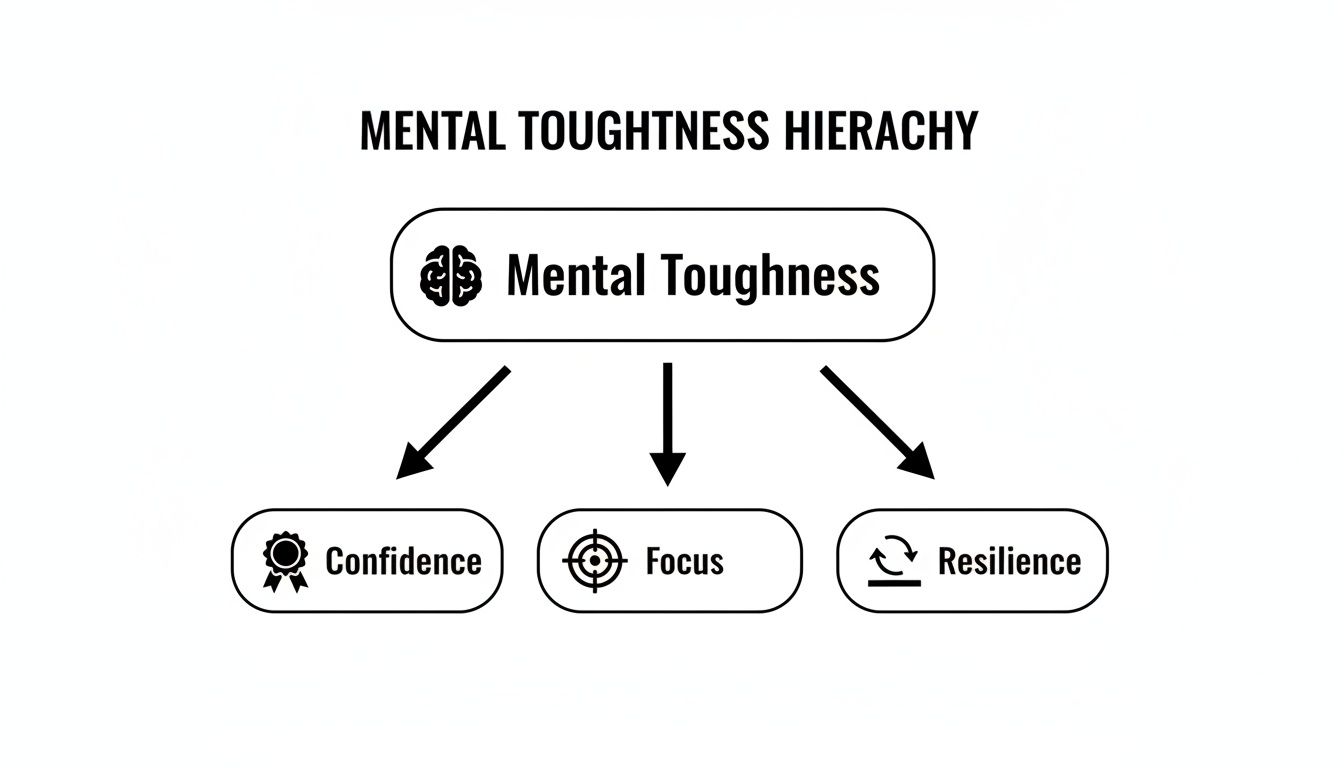
This visual shows that mental toughness isn't just one thing; it's a combination of interconnected skills that have to be developed together.
The key at this stage is to equip teen athletes with strategies for self-regulation. The goal is for them to become their own mental coach on the field, capable of managing their internal state under pressure.
Here are some advanced techniques that work well for this age group:
-
Developing Pre-Game Routines: Help them build a consistent, personalized warm-up routine that prepares them both physically and mentally. Practical Tip: Have them create a "Game Day Playlist" with songs that get them into their ideal mental state—some to energize them, and others to calm their nerves. The music becomes an anchor for their routine.
-
Managing Performance Anxiety: Teach them to recognize the physical signs of anxiety—a racing heart, sweaty palms—not as a threat, but as their body getting ready for action. Practical Tip: Introduce "grounding" techniques. Have them press their feet firmly into the ground and name five things they can see, four they can feel, and three they can hear. This pulls their focus from internal anxiety to the external environment.
-
Navigating Team Dynamics: Open up conversations about effective communication, how to handle conflict with teammates, and the importance of understanding their role on the team. These social and emotional skills are just as critical to success as the physical ones.
Mental Skills Drills For Practice And Home
It’s one thing to understand the building blocks of mental toughness, but it’s another to actually build them. Just like hitting a baseball or shooting a free throw, mental skills get sharper with repetition. The best way to make sports psychology stick is to weave it directly into an athlete's routine at practice and at home.
This section is a practical playbook for parents and coaches—simple but powerful exercises you can start using today. These drills turn abstract ideas into concrete actions, giving young athletes real tools they can pull out of their back pocket when the pressure is on.
And it’s a needed shift. The market for sports mental drills is projected to explode from USD 300 million to USD 1,200 million by 2030. This isn't just a trend; it's a response to the fact that intense youth sports can lead to burnout rates as high as 20-30% without proper mental conditioning. For more on this industry evolution, you can check out the full market research on sports mental drills.
The Traffic Light Method For Emotional Regulation
One of the toughest hurdles for young athletes is keeping emotions in check. Whether it’s frustration from a mistake or anger over a bad call, big feelings can derail performance. The Traffic Light method is a simple, visual cue to teach them to pause and choose a response instead of just reacting.
Here’s how to coach it:
-
Red Light (Stop): The instant a strong emotion flares up, they picture a red light. They stop everything and take one deep, slow breath. This acts like a circuit breaker for that knee-jerk emotional reaction.
-
Yellow Light (Assess): In that brief pause, they ask a simple question: "What’s happening, and what can I control?" They name the feeling ("I'm angry") and find the one thing they can do next.
-
Green Light (Respond): With a clearer head, they choose a productive action. It could be saying a personal reset word, getting back into a ready stance, or giving a teammate a high-five.
Why It Works: This drill wedges a critical space between the trigger and the reaction. It shows young athletes they are in charge of their emotions, not the other way around. Over time, this mental sequence becomes second nature, helping them stay composed when it matters most.
Mind Movies For Powerful Visualization
Visualization is a cornerstone of sports psychology, building confidence by wiring the brain for success. "Mind Movies" turn this powerful technique into something fun and easy for kids. The goal is simple: create and rehearse a short, vivid mental video of them performing perfectly.
How to Practice It:
- Step 1 Script the Scene: Have the athlete pick one specific skill—like sinking a free throw or nailing a gymnastics routine. Ask them to describe what success looks, sounds, and feels like in detail.
- Step 2 Rehearse the Movie: In a quiet moment, like before bed or during warm-ups, they close their eyes and play their "mind movie" from a first-person perspective. Urge them to engage all their senses: see the ball go in, hear the net swish, feel the texture of the ball.
- Step 3 Keep it Short and Positive: The movie should only last 15-30 seconds and must always end with a successful outcome. This repetition creates a powerful mental blueprint for success.
This technique essentially primes the brain for performance, making success feel familiar and within reach. For more strategies like this, our guide on mental skills training for athletes is a great resource.
Pressure Inoculation Training In Practice
A classic coaching mistake is to make practice environments too comfortable—nothing like a real game. Pressure Inoculation Training (PIT) does the opposite. It intentionally creates small, controlled doses of game-like stress in practice to "inoculate" athletes against pressure.
How to Implement It:
- Add Consequences: Introduce small, fun stakes. For example, the losing team in a scrimmage does five push-ups, or practice doesn’t end until the team makes five free throws in a row.
- Use a Countdown Clock: Run drills with a loud, ticking clock to mimic the urgency of a last-second play.
- Simulate Crowd Noise: Play pre-recorded crowd sounds from a speaker during key drills to help athletes learn to tune out distractions and maintain their focus.
Why It Works: PIT gets athletes accustomed to the physical and mental sensations of pressure in a low-stakes setting. When they face those same feelings in a game, it's no longer a shock to the system. Their minds and bodies already know how to perform through the noise, giving them a massive competitive advantage.
For quick reference, here’s a summary of these drills and when they’re most effective.
Mental Skills Drill Quick-Start Guide
| Drill Name | Primary Goal | Best For |
|---|---|---|
| Traffic Light Method | Emotional regulation | In-game moments of frustration, anger, or over-excitement after mistakes or bad calls. |
| Mind Movies | Confidence & skill reinforcement | Pre-practice, pre-game, or nightly routines to build a mental blueprint for success. |
| Pressure Inoculation | Stress management | During practice drills to simulate game-day pressure and improve focus under duress. |
By making these simple drills a consistent part of training, you’re not just coaching the sport—you’re coaching the athlete.
Knowing When to Seek Professional Guidance
While parents and coaches are the first line of defense, knowing the difference between a tough week and a deeper mental struggle is everything. Bringing in a specialist isn’t admitting defeat—it's a smart, proactive play to give a young athlete the expert coaching they need to get back on track.
Think of a sports psychologist as a specialized coach for the mind. You’d see a physical therapist for a sprained ankle, right? In the same way, a mental performance professional offers targeted strategies for breaking through mental blocks, handling crushing pressure, or navigating the tough psychological road back from an injury.
Red Flags to Watch For
Sometimes, a young athlete's struggles are bigger than what a pep talk or a few extra drills can solve. If you notice the following behaviors becoming consistent patterns, it might be time to call in a professional. These signs often point to an underlying issue that’s stealing their joy and holding back their performance.
Here’s a simple checklist to help you spot when it’s time to take that next step.
- Persistent Pre-Game Anxiety: We're talking more than just butterflies. This looks like awful sleep before every competition, physical symptoms like nausea or headaches, or a constant sense of dread about having to play.
- A Total Loss of Enjoyment: The sport they once loved now feels like a chore. They might drag their feet to practice, pull away from teammates, or show zero happiness even after a great play.
- Inability to Move Past Mistakes: One error shouldn't ruin an entire week, but for them, it does. They become their own worst critic, obsessing over tiny slip-ups and losing all their confidence in the process.
- Drastic or Unexplained Drop in Performance: They’re physically healthy and putting in the work, but their performance has fallen off a cliff. It's like they can't access the skills they know they have.
Seeking professional help is about empowering your athlete, not labeling them. It gives them a confidential, expert resource to build the mental toughness needed to handle the unique pressures of their sport and feel in control again.
What Does a Sports Psychologist Do
A great sports psychologist helps young athletes build a personalized mental toolkit. They don't just talk about problems; they deliver actionable, evidence-based strategies. For instance, if an athlete is paralyzed by a fear of failure, a professional can teach them cognitive-behavioral techniques to challenge and reframe those destructive thoughts.
Practical Example: A specialist might guide a soccer player who freezes during penalty kicks through a specific routine: take three deep breaths, visualize the ball hitting the back of the net, and say a cue word like "execute" right before the kick. This replaces a pattern of fear with a pattern of focus.
They also work on building rock-solid pre-performance routines, advanced visualization skills, and effective emotional control strategies tailored to the athlete's sport and personality. For a closer look at what that process entails, you can find great insights into psychological counseling for teen athletes and see how it builds a true competitive advantage.
This kind of specialized coaching ensures your child gets the expert support they need to conquer their challenges and, most importantly, rediscover their love for the game.
The True Competitive Advantage for Young Athletes
We’ve covered a lot of ground in this guide, digging into the world of sports psychology for youth and pulling out simple, powerful tools from what can often feel like a complicated field. The real goal here isn’t to manufacture perfect, unbeatable athletes. It’s to help raise happier, tougher, more resilient kids who know how to handle the heat and, most importantly, find real joy in playing their sport.
The mental toolkit we’ve built is really about a few core ideas. By now, you can see that confidence, focus, and resilience aren't just fuzzy concepts—they're skills. And like any other skill, they get stronger with the right kind of practice.
Your Blueprint for Action
Getting started on the path to mental strength is actually pretty simple if you stick to what works. Keep these takeaways in your back pocket to make a real difference for your young athlete:
- Start with the Pillars: Make confidence, focus, and resilience your top priorities. Everything else in mental performance is built on top of them.
- Age is Everything: You have to match the tool to the kid. Fun games are perfect for the little ones, while more structured routines are better suited for teens.
- Make it a Habit: The best way to train the mind is to weave it directly into physical practice. Drills like the "Traffic Light" game or creating "Mind Movies" turn mental training from an idea into a concrete, repeatable action.
The greatest competitive edge you can give a young athlete isn't fancier gear or more hours on the field—it's a strong mind. The very same skills they use to manage a pressure-filled moment in a game are what they'll draw on to navigate challenges at school and in life.
This whole journey kicks off with small, steady steps. You don’t need to be a psychologist to start making a positive impact. Just pick one or two strategies we’ve talked about. Maybe you ask your athlete about their "highlight reel" after a game, practice box breathing together in the car, or help them reframe a mistake as a chance to learn something new.
When you champion sports psychology for youth, you're giving them more than just a way to play better. You're handing them an internal compass that will guide them toward success and well-being, long after the games are over. That’s an advantage that lasts a lifetime.
Frequently Asked Questions
When it comes to the mental side of youth sports, parents and coaches often have a lot of questions. Here are some straightforward answers to the most common ones I hear in my practice.
At What Age Should My Child Start Learning Mental Skills?
You can start planting the seeds of mental toughness as early as age 6 or 7. At this age, it’s not about formal training. It's about fun, game-based activities that teach core values like good sportsmanship, listening to the coach, and simply trying your best.
Once kids hit the 10 to 13-year-old range, they're ready for more structured concepts like basic goal-setting and positive self-talk. The more complex sports psychology techniques, like advanced visualization for managing performance anxiety, are best reserved for teenagers who can really dig into those abstract ideas.
Is Sports Psychology Only for Elite Athletes?
Not at all. This is probably the biggest myth out there. Mental skills training is for any young athlete who wants to enjoy their sport more, build confidence, and perform better. Think of it as a proactive tool, not just something you turn to when there's a problem.
It’s like strength and conditioning for the mind. You’re building mental muscle to prevent issues like burnout and anxiety before they ever start. Every single athlete, no matter their level, benefits from a stronger mental game.
How Do I Talk to My Child About Mental Training?
Keep it positive and frame it as skill-building, not problem-fixing. Instead of saying "you seem anxious," try using phrases like "sharpening your mental game" or "performance training." This makes it feel empowering, not remedial.
Actionable Tip: Connect it to something they admire. For example, "You know how Steph Curry is so calm when he shoots free throws? He practices that. It's a skill, just like his dribbling. Let's try a quick breathing game that top players use." This approach makes mental training feel like a totally normal and essential part of becoming a great athlete.
What Is the Most Important Mental Skill to Develop?
If I had to pick just one, it would be resilience. All mental skills are connected, but resilience—the ability to bounce back from a mistake, a bad call, or a tough loss without crumbling—is the foundation for long-term success and happiness in sports.
You can actively build this skill in your athlete. Here’s how:
- Praise effort, not just the win: Celebrate their hard work and grit, no matter what the scoreboard says.
- Reframe "failure": Help them see mistakes as information and learning opportunities, not the end of the world.
- Model resilience yourself: The way you handle setbacks on the sideline speaks volumes. They're watching you.
An athlete with a resilient mindset is built to last. They can navigate the inevitable ups and downs of sports, keep their self-belief intact, and find joy in the game for years to come.
At Dr. John F. Murray, we specialize in building these essential mental skills from the ground up. If you're ready to give your young athlete a true competitive advantage on and off the field, explore our programs and see how we can help.