
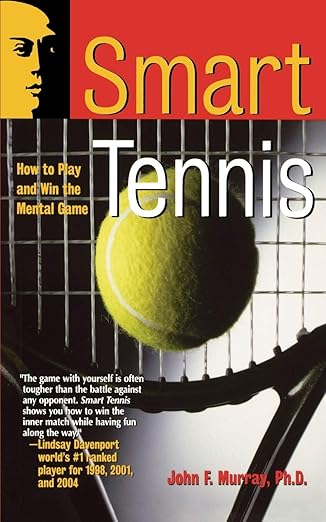
When it comes to tennis, sports psychology is all about applying proven mental skills training to sharpen your performance, focus, and resilience right there on the court. It’s not just a fix for when things go wrong; think of it as a proactive tool for building a serious competitive edge. It’s how you master the mental game that truly separates the good players from the great ones.
The Mental Advantage: Why Sports Psychology Wins Matches

Have you ever wondered what really makes the difference between the world’s top tennis players? It’s rarely a faster serve or a harder backhand. When two players are almost perfectly matched in physical talent and technical training, the winner is almost always decided by the battle fought between the ears. This is the heart of sports psychology in tennis—a discipline all about strengthening your mind to win more matches.
Here’s a good way to think about it: your physical skills set your potential, but it’s your mental skills that dictate how much of that potential you can actually tap into under pressure. Hitting a clean winner feels simple on a quiet practice court, doesn’t it?
But put yourself in a tense tiebreak—crowd roaring, adrenaline surging—and that same shot suddenly feels a thousand times harder. Your muscles get tight, your mind starts racing, and that little voice of doubt starts to creep in.
Why the Mental Game Matters Most
The one-on-one nature of tennis amplifies the need for mental toughness like nothing else. Unlike team sports, you can’t lean on a teammate or have a coach call a timeout mid-game. You’re out there alone, owning every decision, every shot, and every single emotional response. This is where a well-trained mind becomes your most powerful weapon.
A player who has honed their mental skills can:
- Stay focused on the point at hand, not the last error or the scoreboard.
- Maintain confidence even when they’re down a set or up against a tough opponent.
- Manage anxiety during those make-or-break moments, stopping a mental or physical meltdown before it starts.
- Bounce back quickly from setbacks with unwavering resilience.
The ability to perform under pressure, maintain focus during long matches, and recover from setbacks is crucial for success on the court. It’s the mental game that turns talent into titles.
Developing Unbreakable On-Court Focus

In the heat of a tennis match, your focus is everything. It’s your most valuable weapon. But distractions are everywhere—the crowd, a bad call, or that double fault from two games ago that’s still rattling around in your head. Letting your attention slip for just a split second can mean the difference between a blistering winner and another unforced error.
The trick is to stop thinking of focus as something you either have or don’t. It’s not a passive state. It’s an active skill, something you can train, control, and strengthen just like your forehand.
Think of your attention as a mental spotlight. A cornerstone of sports psychology in tennis is learning how to aim that spotlight exactly where it needs to be—on the ball, your opponent’s court position, your next move. When you get good at this, you can intentionally dim the lights on every other distraction that won’t help you win the point right in front of you.
Strengthening Your Focus Muscle Off the Court
Just like your biceps, your “focus muscle” gets stronger with consistent training. Mindfulness exercises are the mental equivalent of going to the gym. Spending just five to ten minutes a day focusing on your breath—simply noticing when your mind drifts and gently bringing it back—builds the exact same mental discipline you need on the court.
Visualization is another fantastic off-court technique where you mentally rehearse your performance. When you vividly imagine yourself staying locked in and executing shots perfectly, you’re literally creating a mental blueprint for success. To really dive into this, you can learn more about how visualization in sports enhances both confidence and concentration.
Making these techniques a regular part of your training will help you forge that unbreakable focus you need from the first serve to the final match point.
Building Rock-Solid Confidence and Self-Belief

Here’s a tough truth: confidence on the tennis court isn’t some magical gift you’re either born with or not. It’s a skill. Just like your forehand or your serve, it has to be deliberately built, practiced, and hardened over time.
Too many players ride a confidence rollercoaster, letting their self-belief soar or crash based on their last shot or the current score. This creates a fragile foundation that’s guaranteed to crack under pressure.
The real key is to untie your self-worth from the scoreboard. Lasting, durable confidence comes from a deep-seated trust in your preparation, your process, and your ability to figure things out, no matter what happens in a match. This is a core idea in sports psychology in tennis—turning confidence from a fickle feeling into a reliable weapon in your arsenal.
How to Thrive Under Pressure and Control Anxiety
Pressure is just part of the deal in competitive tennis. It’s that electric feeling in a tiebreak, the weight of a huge break point, or the heart-pounding moment you step up to serve for the match. Some players get crushed by that weight. Champions learn how to use it as fuel.
The secret is knowing what’s actually happening inside your body and mind. When you feel that pressure, your body’s ancient “fight or flight” response takes over. Your system gets a jolt of adrenaline, your heart starts racing, and your muscles clench up.
This response is fantastic for surviving a real threat, but on the tennis court, it’s a performance killer. Your fine motor skills—the kind you need for a delicate drop shot or a sharp volley—completely fall apart. Your decision-making goes from calm and strategic to rushed and panicked. A huge part of sports psychology for tennis is learning to get this response under control.
Reframing Setbacks for Long-Term Growth
Instant recovery is what gets you through a match, but how you think about your mistakes after the match is what builds lasting resilience. Too many players get trapped in self-criticism, telling themselves stories about permanent flaws like, “I’m just not good under pressure.” That kind of thinking is destructive and will keep you stuck.
A much more powerful approach is to reframe those setbacks. Attribute them not to who you are, but to controllable factors you can actually work on. Instead of seeing a missed forehand as a personal failure, see it for what it is: a technical issue with a tangible solution. This shift in perspective is incredibly empowering because it puts you back in control.
“Resilience is not about never falling down. It is about how you get back up. In tennis, it’s about how you respond to the last point, not the point itself.”
So, instead of thinking, “I have a terrible backhand,” a resilient player thinks, “My footwork was late on that backhand.” The first statement is a final judgment. The second is a solvable problem. It’s a subtle shift, but it’s the difference between feeling hopeless and feeling motivated to hit the practice court.
Creating Your Personal Mental Training Plan
Just like you wouldn’t skip your physical conditioning, your mental game needs a consistent, structured plan to get stronger. Think of focus, confidence, and resilience as muscles—they need regular workouts. Weaving these skills into your weekly routine is what turns sports psychology from a neat idea into a real competitive edge on the court.
A solid mental plan doesn’t have to be some monumental undertaking. It’s really about carving out small, dedicated pockets of time for specific mental drills. The goal is to make these practices as automatic as your warm-up forehands, so they’re right there for you when the pressure cranks up.
For more information on mental performance coaching or psychological services, or to schedule a consultation, visit my Sports Psychology Services page.