Skip to content

Dr. John F Murray

Menu
  • Home
    • About
  • Services
    • Mental Training for Peak Performance
    • Psychological Counseling
    • Business Psychology
    • Sports Psychology Workshops
  • Faq
  • Contact
  • MY BLOG

Tag: athlete mindset

Mental Skills Training for Athletes A Performance Playbook

No Comments
| Blog

Mental skills training is the systematic practice of psychological strategies designed to sharpen your mind for better performance. It’s about building mental toughness as a trainable skill, not a mythic quality. The goal is to train your brain with the same focus you give your body, making your mind your greatest competitive asset. For example, a basketball player practicing free throws also needs to practice the mental routine of blocking out crowd noise and focusing only on the rim—that's mental skills training in action. Your Untapped Advantage: The Mental Game Physical talent gets you in the game. Mental skill is what wins championships. For far too long, athletes and even experienced coaches have bought into the idea that mental toughness is an innate trait—you either have it, or you don't. This outdated myth is exactly what holds so many talented performers back. The truth is, mental skills are just like physical ones; you can systematically train, develop, and sharpen them with consistent practice. Think about it this way: no one expects to get physically stronger without hitting the gym. Yet, countless athletes walk into high-stakes competitions without ever having trained their mind to handle the pressure, focus, and inevitable adversity. This is where mental skills training for athletes becomes a true game-changer. It shifts the approach from a reactive fix for problems to a proactive strategy for unlocking your peak potential. Beyond Raw Talent There's a ceiling for raw talent. Sooner or later, everyone hits it. The real difference between a good athlete and a great one often boils down to what happens between the ears in a critical moment. Can you sink that free throw with the game on the line? Can you recover instantly from a mistake without letting it spiral? Listen to any elite athlete, in any sport, and they’ll credit their success to mental fortitude. They get it. They understand that a strong mental game delivers tangible results on the field, court, or track. That's why psychological skills training has finally started getting the attention it deserves as a vital tool. While old misconceptions saw these skills as innate, solid research has shown that systematic mental training boosts not just performance but also an athlete's overall quality of life. You can dig into the science on pmc.ncbi.nlm.nih.gov. Mental training isn’t about eliminating fear or doubt. It's about performing your best despite them. It’s the ability to execute your skills, under pressure, on demand. Investing in your mental game is the single most powerful way to elevate your physical abilities. It builds a foundation that lets your talent shine when it matters most, making sure your mind is your greatest asset, not an obstacle. The Core Pillars of Mental Performance Mental skills training is built on several key pillars that directly impact how you perform. These aren't abstract theories; they're practical tools you can learn and use right away. Visualization: This is mentally rehearsing a perfect performance. Actionable Tip: Before a game, a soccer player can close their eyes for 60 seconds and visualize the perfect penalty kick—the run-up, the solid contact, the ball hitting the top corner of the net. Self-Talk: This is mastering your inner dialogue. Actionable Tip: When a tennis player double faults, instead of thinking "I'm terrible," they can use a pre-planned cue like "Legs and toss" to focus on the next serve's mechanics. Focus & Arousal Control: This is learning to tune out noise and manage your energy. Actionable Tip: A golfer can use a slow, deep breath out as a physical trigger to quiet their mind and commit to a putt. Resilience: This is the art of the bounce-back after errors or losses. Actionable Tip: A baseball player who strikes out can have a "flush it" routine, like tapping their helmet twice, to mentally leave the at-bat behind before returning to the dugout. You might be interested in our guide on the connection between sports and mental health. Conducting Your Personal Mental Skills Audit Before you can build a stronger mental game, you have to know what you’re working with. A personal mental skills audit is your starting line—it’s how you move from just guessing what’s wrong to creating a clear, actionable plan for growth. It’s all about taking an honest look at your own psychological tendencies to see where you’re solid and where you consistently trip yourself up. This isn’t about judgment. It’s about awareness. A strength coach wouldn't write you a program without first assessing your physical capabilities, right? The same logic applies here. This process is the critical first step in taking real ownership of your development and ensuring your mental skills training for athletes is targeted where it matters most. Think of it as a diagnostic test for your mind. The insights you gather will shape every technique and drill that follows. Starting With Self-Reflection The simplest, yet most powerful, tool you have is guided self-reflection. But don't just ask generic questions. You need to zero in on specific in-game scenarios that reveal your true mental habits under the gun. Grab a journal and spend some quality time with these prompts. Be brutally honest. After a big mistake, what’s my immediate internal reaction? Am I my own worst critic, instantly thinking, "I can't believe I did that," or do I shift to something constructive like, "Okay, reset. Next play."? When I feel pressure building, where do I feel it in my body? Do my shoulders tighten up? Does my breathing get shallow and quick? Pinpointing your physical cues is the first step to controlling them. What specific distractions throw me off my game? Is it the crowd, a cheap shot from an opponent, or my own nagging worries about the final score? Get specific. This process gives you a baseline. It shows you the ingrained mental habits you've built up over years of competing, giving you clear targets to aim for. Using a Mental Performance Checklist For a more structured and quantitative look, a self-assessment checklist

Read More »

A Great Sports Psychology Book to Master the Mental Game

No Comments
| Blog

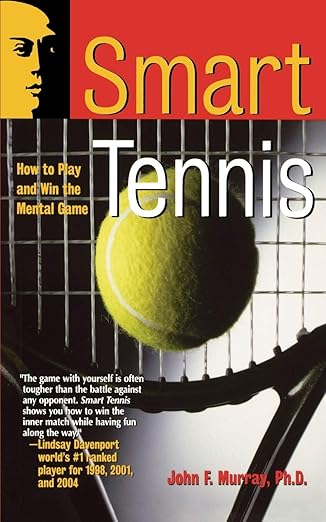
In elite sports, the difference between winning and losing often comes down to the six inches between the ears. While physical conditioning is crucial, mental mastery is the ultimate differentiator. The same principles that forge champions on the field are equally powerful for executives leading high-stakes projects and individuals navigating personal challenges. The mental game is no longer a secret weapon for the few; it’s an essential component of high achievement in any competitive arena. This book “Smart Tennis: How to Play and Win the Mental Game” is selected specifically for its actionable insights and practical applications. We move beyond abstract theories to provide you with concrete tools. Whether you’re an athlete striving for consistency, a coach building a resilient team, or an executive driving high performance, this offers tangible strategies for managing pressure, building unshakeable confidence, and turning psychological skills into a competitive advantage.  You will find short summaries and key takeaways tailored to athletes, coaches, and parents. This ensures you can translate knowledge from the page directly into measurable improvements in performance, whether on the field, court, or in the boardroom. Although the context might see limited to tennis, it applies to really anything. Smart Tennis: How to Play and Win the Mental Game by Dr. John F. Murray Best For: Athletes and coaches seeking a clinical, evidence-based system for mental toughness. When searching for the best books on sports psychology, it’s rare to find one that bridges the gap between dense clinical theory and practical, on-the-court application. Smart Tennis: How to Play and Win the Mental Game stands out precisely because it does this with surgical precision. Authored by Dr. John F. Murray, a licensed clinical and sports psychologist with over two decades of experience working with elite athletes, this book is more than a guide; it’s a professional playbook. What distinguishes this book is its foundation in proven, evidence-based psychological principles. Dr. Murray doesn’t just offer generic advice like “stay positive.” Instead, he translates complex concepts from cognitive-behavioral therapy (CBT), performance psychology, and his own proprietary frameworks like the Mental Performance Index (MPI) into actionable tools. This gives readers a structured, repeatable system for mental conditioning rather than a collection of disconnected tips. Core Strengths and Actionable Insights Smart Tennis excels by providing a clear blueprint for building mental resilience. It’s structured to help you diagnose weaknesses, implement targeted exercises, and track progress, much like a physical training regimen. Pre-Match Mental Routines: The book details how to design a personalized pre-match ritual to prime your mind for competition. For example, a practical routine might include 5 minutes of quiet diaphragmatic breathing, followed by 3 minutes of visualizing your top three strengths (e.g., a powerful serve, a quick first step), and ending with a specific cue word like “Warrior” or “Execute” to trigger your competitive mindset as you walk onto the court. In-Game Focus and Refocusing: Learn to master the “16-second cure” for on-court errors. Dr. Murray outlines a rapid, four-step process for acknowledging a mistake, emotionally resetting, strategizing, and refocusing before the next point. This technique is universally applicable to any sport or performance scenario where immediate recovery from setbacks is crucial. A golfer could use it after a bad shot, or a salesperson after a difficult client call. Managing Performance Anxiety: The book provides concrete cognitive strategies to challenge and reframe negative self-talk. An actionable tip is the “Stop-Challenge-Reframe” technique. When a thought like “I’m going to blow this lead” appears, you mentally yell “Stop!”, challenge its validity (“I’ve held leads before”), and reframe it with a positive instruction (“Focus on this next point”). Instead of trying to suppress anxiety, you’ll learn to reinterpret the physiological symptoms (like a racing heart) as signs of readiness, transforming a potential weakness into a source of energy. Practical Application: A Scenario Imagine you are a tennis player down 0-40, serving to stay in the set. Your inner critic is loud, replaying past double faults. Acknowledge and Release (The 16-Second Cure): Instead of dwelling on the pressure, you apply Dr. Murray’s technique. You physically turn your back to the court, take a deep diaphragmatic breath (physical release), and mentally say “let it go.” Cognitive Reframing: You replace the thought “Don’t double fault” with a positive, process-oriented cue like “Smooth motion, high toss.” This shifts your focus from avoiding failure to executing a specific, controllable action. Strategic Focus: Your plan for the next point is simple: “Serve wide, then hit to the open court.” This clear, tactical thought displaces the emotional chatter and grounds you in the present moment. This structured response, learned directly from the book, gives you a reliable tool to combat choking and maintain composure under fire. Why It’s a Top Choice While the examples are tennis-specific, the underlying principles of focus, emotional regulation, and cognitive control are universal. A basketball player can use the 16-second cure between free throws, and a business executive can apply the same pre-meeting rituals to prepare for a high-stakes negotiation. The book’s power lies in its clinical authority and actionable design. You’re not just reading ideas; you’re being coached by a top-tier sports psychologist. Availability: The book is available in paperback and e-book formats on major online retailers like Amazon. Pros & Cons Pros Cons Authored by a Licensed Psychologist: Grounded in credible, evidence-based clinical practices. Tennis-Centric Examples: Requires readers in other sports to translate the scenarios. Highly Actionable: Provides specific drills, routines, and mental scripts you can use immediately. Not a Substitute for Coaching: The book offers powerful tools but can’t replace individualized therapy for deep-seated mental blocks. Comprehensive System: Covers the full spectrum of mental preparation, from practice to competition. Ultimately, Smart Tennis earns its place as a featured choice because it provides an accessible yet professional-grade toolkit for mastering the mental game. To better understand the foundational principles behind this book, you can learn more about Dr. Murray’s approach to sports psychology and performance on johnfmurray.com. Learn more and purchase the book: johnfmurray.com/news-events/smart-tennis/ Smart Tennis Analysis Item

Read More »

Recent Posts

  • Mental Toughness for Athletes: Proven Techniques to Elevate Performance
  • Mental Skills Training for Athletes A Performance Playbook
  • Unlocking Performance with Sports Mental Health Strategies
  • A Great Sports Psychology Book to Master the Mental Game
  • Mastering Sports Psychology and Performance for Athletes

Recent Comments

No comments to show.

Archives

  • December 2025
  • July 2025

Categories

  • Blog

Dr. John F Murray 2025 . Powered by WordPress